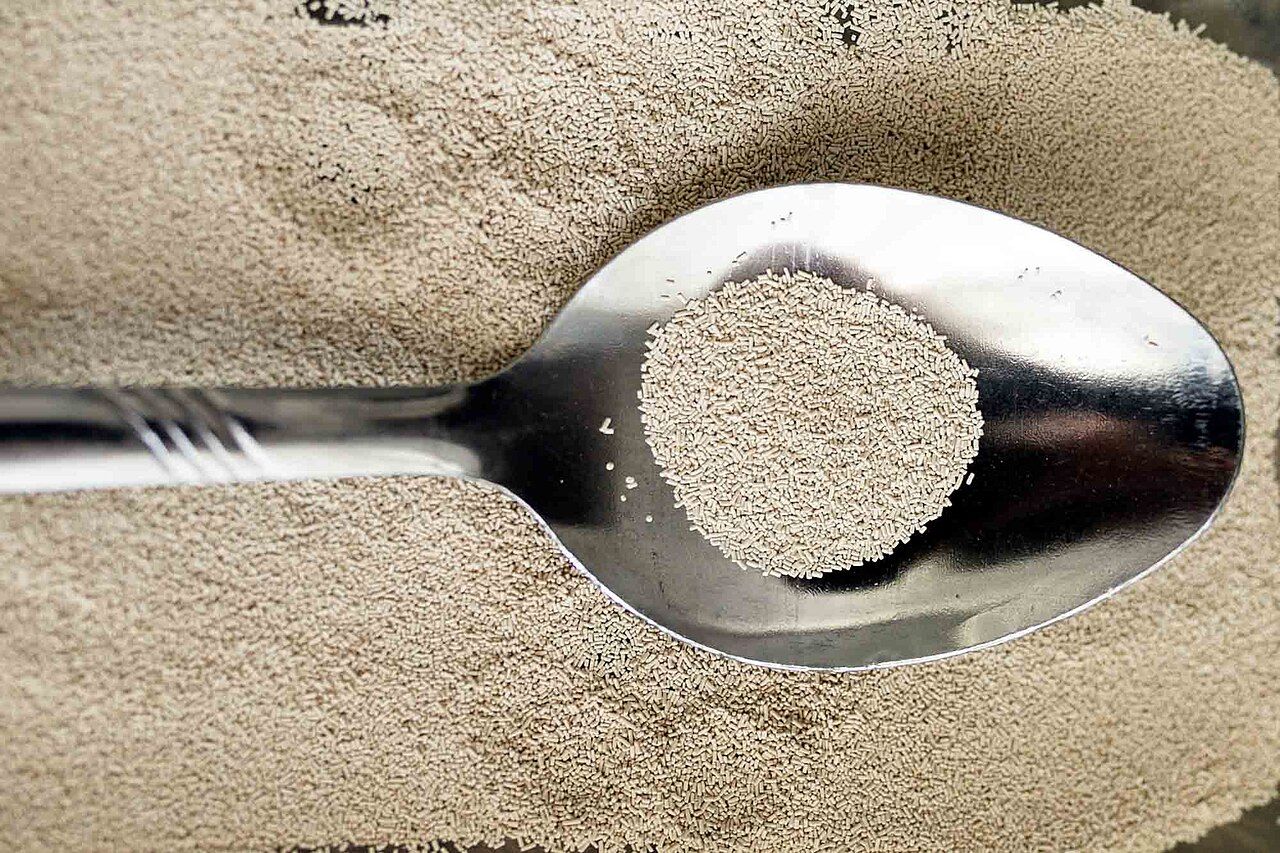

Yeast is a living fungus that makes dough rise. You will meet it in three forms at the shop, and in a fourth form in your own kitchen.
Fresh yeast
Sold as a cube from the refrigerator. It works fast and strongly but does not keep; use it within a week or two of opening. It is crumbled into lukewarm water before going into the dough.
Active dry yeast
Dry yeast in coarse granules. It is woken up in lukewarm water for 5–10 minutes before use.
Instant dry yeast
Fine granules, and the most convenient kind: it is mixed straight into the flour. An unopened packet keeps for months.
Sourdough
A living culture of wild yeast and bacteria that develops when flour and water are left to themselves. It works slowly, and in return gives deeper flavor, a mild tang and bread that stays fresh longer. We explain how to start one in how to make a sourdough starter.
Conversion table
When the recipe calls for one yeast and you have another:
| Fresh yeast | Active dry yeast | Instant yeast |
|---|---|---|
| 10 g | 4 g | 3 g |
| 21 g (half a cube) | 8 g | 7 g |
| 42 g (one cube) | 17 g | 14 g |
Is the yeast dead?
Stir a teaspoon of sugar and a little yeast into half a cup of lukewarm water. If foam forms on the surface within 10 minutes, the yeast is alive. If not, bread made with it will not rise.
Mind the water temperature: water hot enough to be uncomfortable on your hand will kill yeast. Lukewarm is enough.