
Bread is older than farming. People were grinding and baking wild grains before they learned to sow and harvest wheat. The timeline below sums up the main stops in that long story; the details are in the other articles in this section.
| Period | What happened? |
|---|---|
| About 14,400 years ago | Hunter-gatherers in what is now Jordan baked flatbread from wild grains. The oldest known remains of bread. |
| About 10,000 years ago | Wheat and barley were domesticated in the Fertile Crescent; bread became everyday food. |
| Around 3000 BC | Leavened bread became common in ancient Egypt; bread and beer drew on the same knowledge of fermentation. |
| 2nd century BC | Baking became a profession in Rome, and bakers formed a guild. |
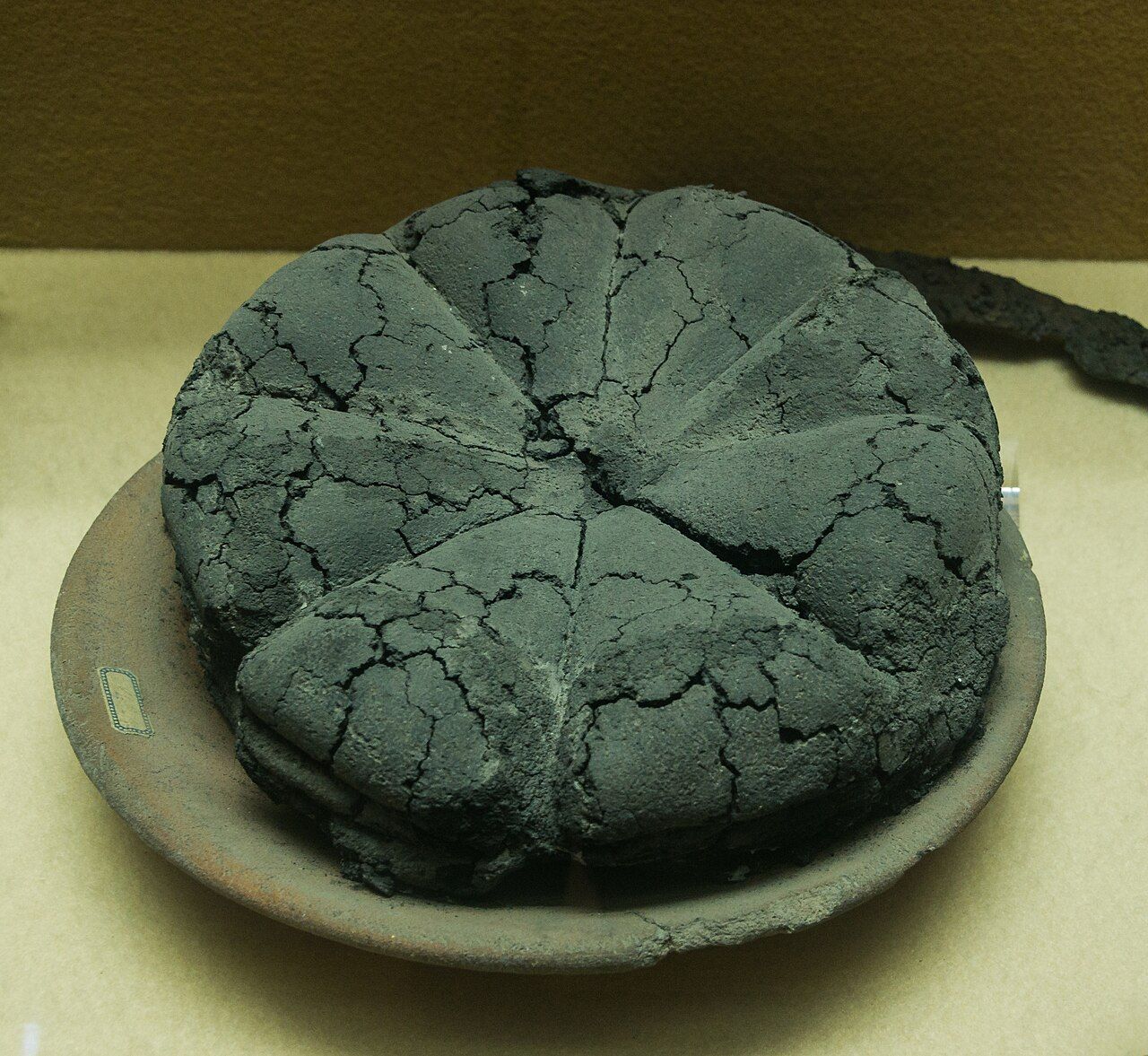
| AD 79 | Vesuvius erupted; loaves in the bakeries of Pompeii were carbonized and have survived to this day. |
| Middle Ages | Water mills and windmills spread; bakers' guilds and laws on the price of bread appeared. |
| 1502 | In the Ottoman Empire, the Bursa market regulations set rules for the weight, content and price of bread. |
| 1789 | In France, the shortage and high price of bread became one of the symbols of the anger that led to revolution. |
| 1860s | Yeast was understood to be a living organism; commercial yeast production began. |
| 1870s | Steel roller mills made white flour cheap. |
| 1928 | The first sliced, wrapped bread was sold in the United States. |
| 1961 | A fast industrial bread method, the Chorleywood process, was developed in England. |
| 2000s onward | Sourdough, heritage wheats and craft baking came back into favor. |