Rome: the baker takes the stage
In Rome's early days bread was made at home. From the 2nd century BC baking became a separate trade; bakers formed their own guild and hundreds of bakeries opened in the city. Grain was ground in large stone mills turned by animals or slaves.
Bread was also a matter of politics. The state handed out cheap or free grain to citizens living in the capital, and in later centuries bread itself. The poet Juvenal's phrase "bread and circuses" mocks the habit of ruling the people by keeping them fed and entertained.
The loaves of Pompeii
When Vesuvius erupted in AD 79, bread was baking in the ovens of Pompeii. Dozens of loaves, carbonized under the ash, have survived. Round, and scored on top so as to divide into eight wedges, they let us look at a bakery counter of two thousand years ago. On a loaf found in neighboring Herculaneum, even the stamp naming the slave who made it and his master can still be read.
The Middle Ages: mill and guild
After the fall of Rome, bread making in Europe went largely back to homes and monasteries. Water mills spread, and from the 12th century windmills too. Peasants often had to grind their grain at the lord's mill and bake their dough in the lord's oven, and pay a share for it.
In the towns the bakers' guilds grew strong. Bread was so vital that its price and weight were fixed by law; the regulation issued in England in the 13th century is one well-known example. A baker who sold underweight bread faced heavy penalties. The habit of giving thirteen loaves instead of twelve for fear of punishment is said to be the origin of the English phrase "a baker's dozen".
The color of bread shows class
Bread from sifted white flour was on the tables of the rich; dark bread with bran, rye or barley on the tables of the poor. That perception was reversed only in the 20th century, when the health value of whole grains came to be understood.
Bread instead of a plate
At medieval tables, thick slices of stale bread were used as plates. The food was set on the slice, and when the meal was over the bread, soaked with juices, was either eaten or given to the poor.
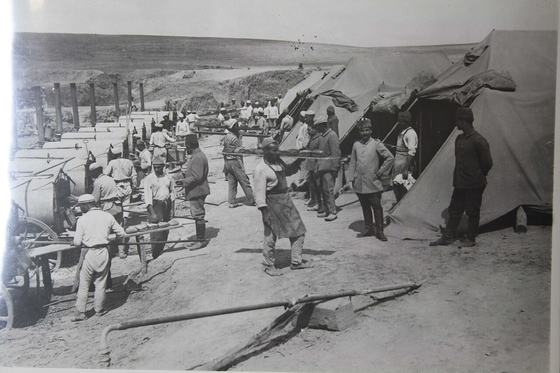
In the same centuries, bread in the Ottoman Empire was run by a very different system: bread in the Ottoman Empire.