- Time
- About 24 hours (mostly waiting)
- Difficulty
- Medium
- Makes
- 1 loaf
This recipe needs a lively starter, one that has doubled in volume since its last feeding. If you do not have a starter yet, read how to make a sourdough starter first.
Method
- Autolyse. Mix the flour and water, cover and leave for 30–60 minutes. This rest develops the gluten without kneading.
- Starter and salt. Add the starter and the salt and work them thoroughly into the dough.
- Folds. Every 30 minutes for the first two hours, wet your hand, take hold of one edge of the dough, pull it up and fold it over; turn the bowl and repeat for all four sides. Four rounds in total.
- Bulk fermentation. Leave the dough at room temperature for 4–6 hours in total, counting from when the starter went in. It should have grown by about half, with a bubbly surface, and wobble when the bowl is shaken.
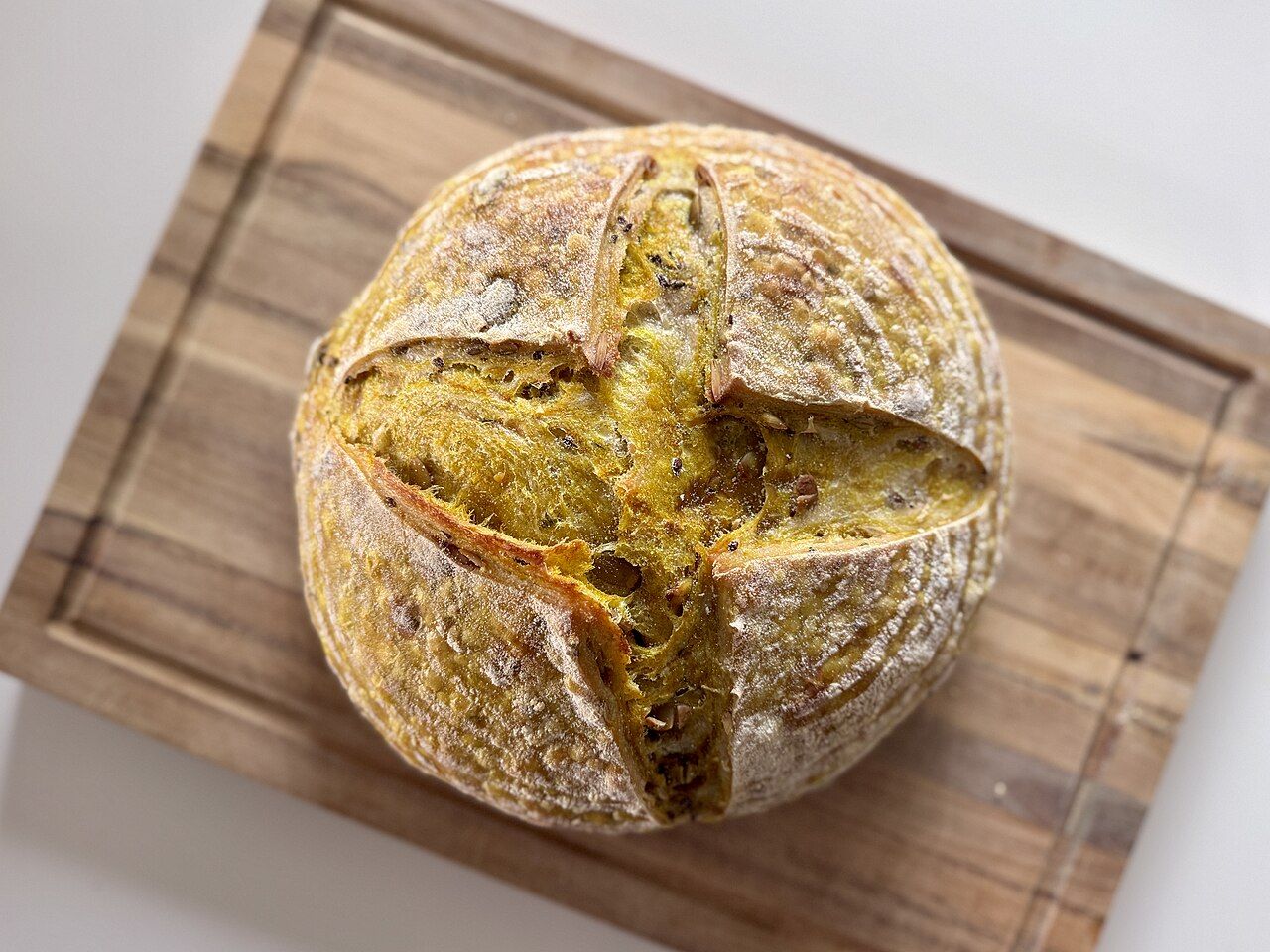
- Shape. Gather the dough gently on a floured counter, rest it for 20 minutes, then shape it into a tight ball or oval. Place it seam side up in a floured proofing basket or a cloth-lined bowl.
- Cold proof. Cover and leave in the fridge for 8–16 hours. This is where the flavor develops.
- Bake. Heat a cast iron pot with its lid in a 250 °C (480 °F) oven for 45 minutes. Take the dough from the fridge, turn it out onto baking parchment, score the top with a razor blade and lower it into the pot. Bake with the lid on for 20 minutes; then remove the lid and bake at 230 °C (450 °F) for another 20–25 minutes.
- Cool. Wait at least two hours before cutting.
Tips
- The temperature of your kitchen sets the timing. In summer the bulk fermentation is done in 4 hours; in winter it can take 7.
- If the dough is too sticky, cut the water to 350 grams; you can raise it again as your hands get used to it.
- Thick oven gloves are a must when working with a hot pot.