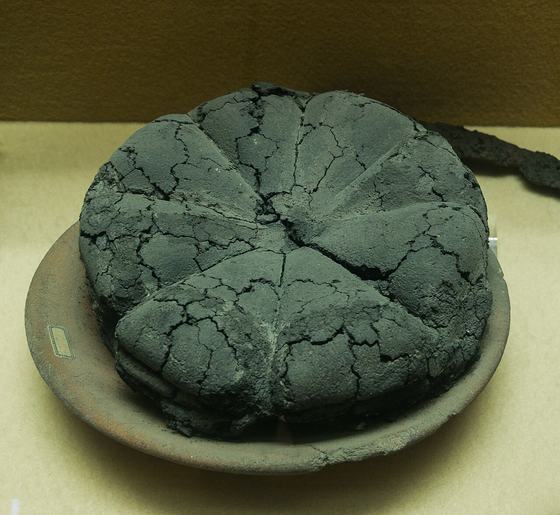
For thousands of years bread was made in more or less the same way. In the last hundred and fifty, every stage of it changed.
White flour for everyone
In the second half of the 19th century steel roller mills replaced stone mills. Rollers separated the bran and germ of the wheat with ease and gave a pure white flour that kept for a long time. White bread, for centuries the preserve of the rich, became cheap. The cost was that the most nutritious parts of the grain left the flour.
Yeast goes into a packet
With his work in the 1850s and 60s, Louis Pasteur showed that fermentation was the work of living microorganisms. Soon afterward pure yeast began to be made in factories. The baker no longer had to feed a sourdough for days; dough rose within hours. Dry yeast became widespread in the 20th century, especially during the Second World War.
Sliced bread
The first bread sliced and wrapped by the machine Otto Rohwedder developed went on sale in 1928 in the US state of Missouri. Within a few years most American bread was sold sliced. The English phrase "the best thing since sliced bread" is left over from the excitement of those days.
The age of speed
The Chorleywood process, developed in England in 1961, all but did away with long fermentation by means of intense mechanical mixing and additives. The time from flour to packet came down to a few hours. Soft, cheap industrial bread that stays fresh for days became the standard in many parts of the world.
The way back
The price of speed was flavor and texture. From the late 20th century bakers and home bakers went back to the old methods: long fermentation, sourdough, stone-ground flour and heritage wheats such as einkorn and emmer. The way sourdough jars multiplied in home kitchens during the pandemic of 2020 showed how far that interest had spread.
Today you can find, on the same street, a packaged loaf produced in minutes and a sourdough loaf that took twenty-four hours. If you would like to start your own: how to make a sourdough starter.