The two big differences between a baker's oven and a home oven are thermal mass and steam. A baker's stone floor does not cool when the door opens, and steam is injected into the oven. At home both can be imitated.
Oven settings
- Top and bottom heat is usually the best setting for bread. The fan dries the surface of the dough early and hardens the crust before its time. If you cannot switch the fan off, lower the temperature by 20 °C (about 35 °F).
- A long preheat: When the oven signals that it is ready, only the air is hot. Wait 30–45 minutes for the walls, the tray and the stone, if you have one, to heat through.
- Rack position: Lower middle. If the top browns too fast, move down one level.
Why does steam matter?
In the first 10–15 minutes a humid oven keeps the surface of the dough flexible. The loaf rises freely before a crust forms, the scores open well, and the crust comes out glossy, thin and crisp. In an oven without steam the crust sets early and the loaf stays small and dull.
Ways to make steam
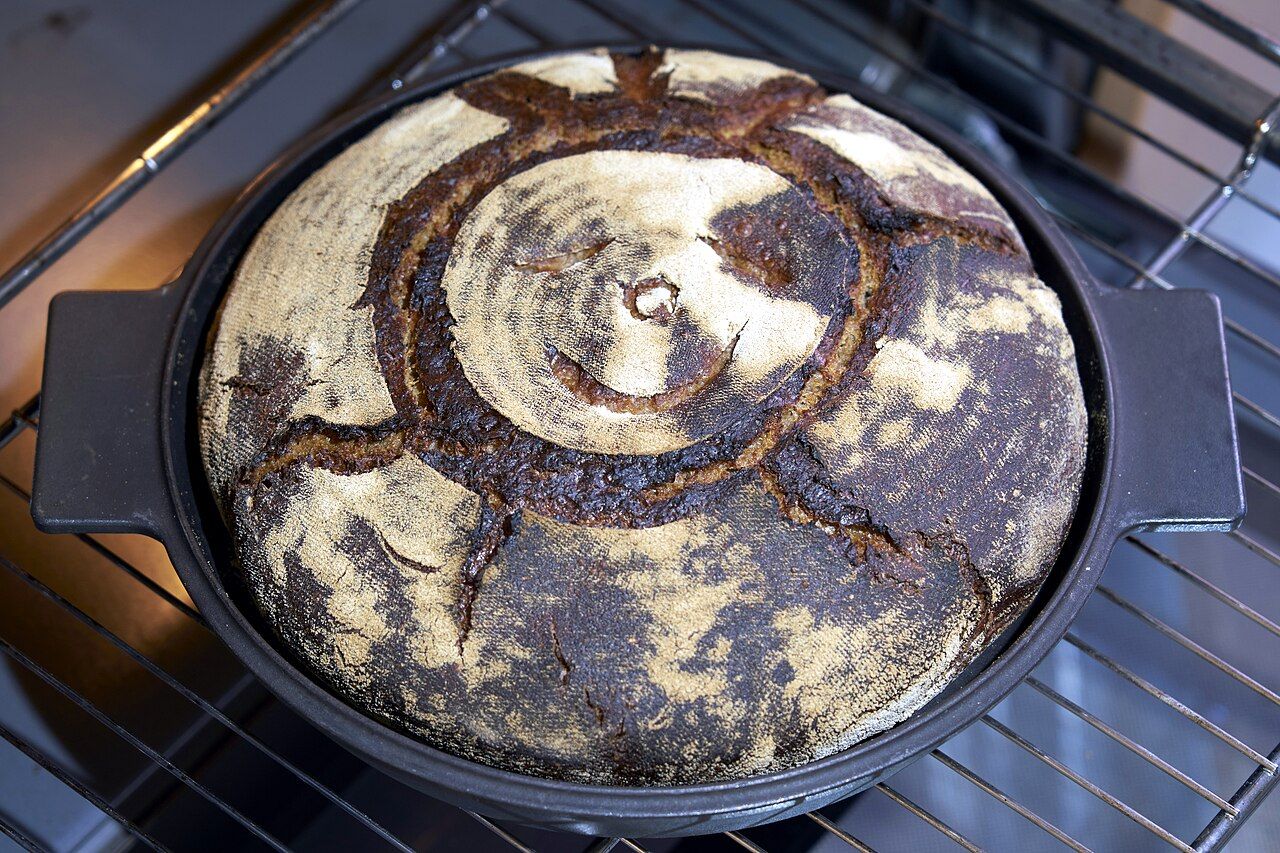
1. A lidded pot (the most effective). Heat the pot along with the oven, put the dough inside and close the lid. The moisture coming off the dough stays in. After 20–30 minutes take the lid off and let the crust brown. This is the most reliable method for round and oval loaves.
2. A tray of hot water. Put an empty metal tray on the oven floor and heat it with the oven. As you load the bread, pour a glass of boiling water into the tray and shut the door at once. For breads that do not fit in a pot, such as baguette and pide.
3. An upturned deep tray. Covering the loaf with an inverted roasting tin or steel bowl also creates the pot effect.
Stop the steam after the first 15 minutes: take the water tray out, or open the oven door for a few seconds. The crust needs dry heat to dry out and crisp.
Stone and steel
A baking stone or a thick steel plate stores heat and passes it quickly into the base of the dough. The bottom bakes better and oven spring increases. If you have neither, preheating a heavy baking tray turned upside down works too.
Knowing when it is done
- Knock on the bottom with a finger: it should sound hollow.
- Do not fear a dark crust. Somewhere between deep gold and chestnut is where the flavor peaks. Pale bread tastes flat.
- If you have a thermometer, the inside should be around 95 °C (205 °F).
Safety
- Do not splash water on the glass oven door; hot glass can crack.
- Use thick, dry oven gloves when handling a hot pot. A wet cloth conducts heat instantly.
- Keep your face and hands away from the steam when you pour the boiling water.