- Origin
- Vietnam
- Time
- About 3.5 hours
- Difficulty
- Hard
- Makes
- 6 rolls
The baguette reached Vietnam in the nineteenth century with French colonial rule. At first it was a European food made from expensive imported flour; over time Vietnamese bakers changed it to suit their own climate and taste. What emerged is shorter than a French baguette and far lighter, with a thin crust that shatters into flakes and an almost empty inside. In Vietnamese bánh mì is the name of both this bread and the sandwich made with it.
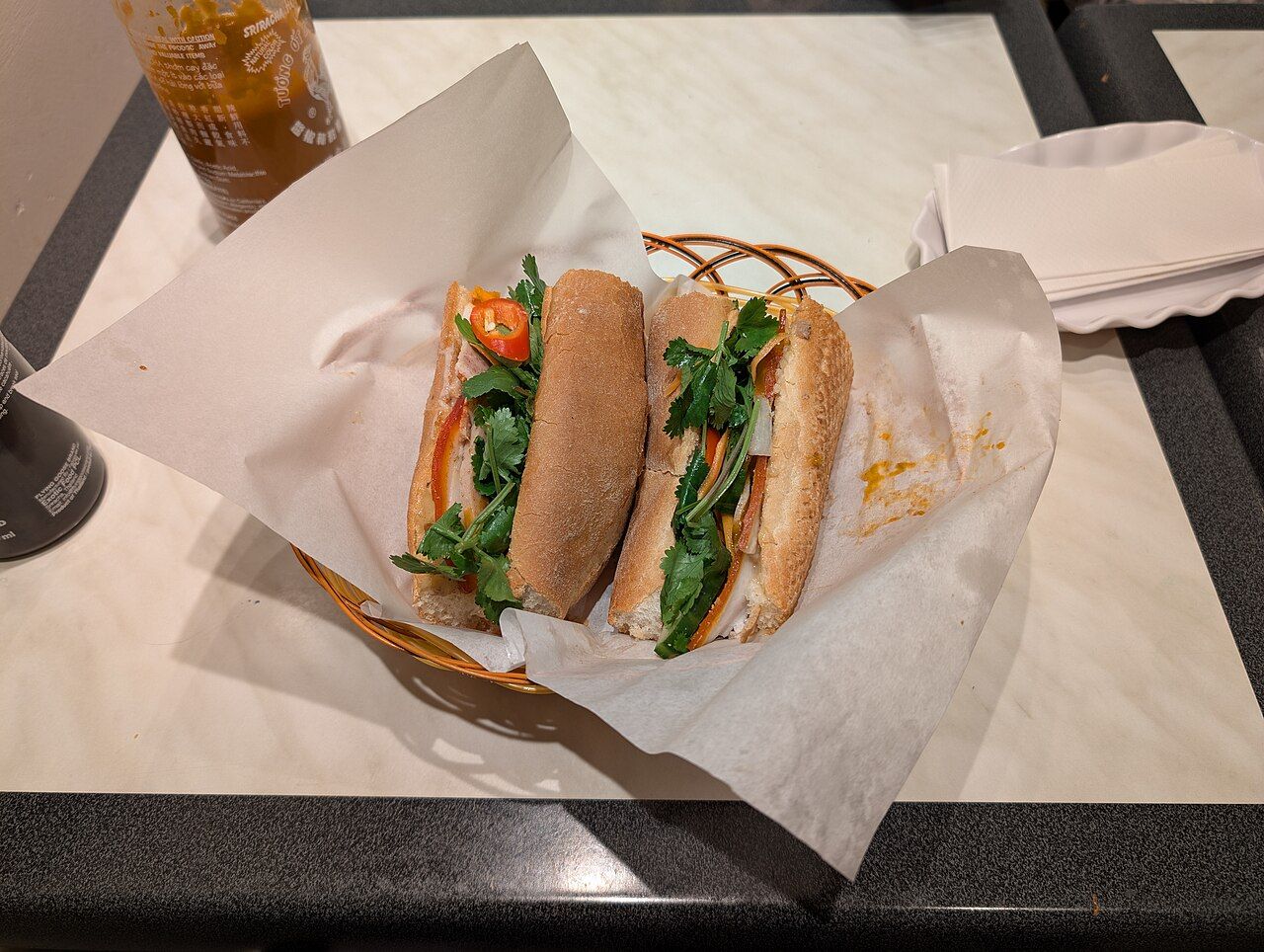
The sandwich is a meeting of two cuisines: the bread is spread with liver pâté and mayonnaise and filled with meat, pickled carrot and daikon, cucumber, fresh coriander and chili. The light bread is what lets it carry that much filling without crushing it.
Method
- Knead the dough. Mix all the ingredients and knead for 12–15 minutes, until the dough is very smooth and elastic. The lightness of the crumb comes from this long kneading.
- Let it rise. Cover and leave for about 1 hour.
- Divide. Divide the dough into 6 pieces, round them and rest for 15 minutes.
- Shape. Flatten each ball into an oval, roll it up tightly from the long side and seal the seam. Taper the ends to make spindles 20 cm (8 in) long.
- Second rise. Leave on a parchment-lined tray, covered, for 60–75 minutes. The rolls should swell noticeably and wobble when touched.
- Score. Make a single slanting slash lengthwise with a razor blade. Spray generously with water.
- Bake. Heat the oven to 230 °C (450 °F) and put a dish of boiling water on its floor. Bake for 18–20 minutes; spray with water once more in the first five minutes.
Tips
- Plenty of steam is the condition for a thin crust; in a dry oven the crust thickens.
- It is often said that rice flour goes into the dough, but most bakers use wheat flour alone.
- It is eaten the same day.