- Origin
- Ethiopia, Eritrea
- Time
- 2–3 days of fermenting, 30 minutes of cooking
- Difficulty
- Medium
- Makes
- 6–8 breads
In Ethiopia and Eritrea, injera is an inseparable part of the meal. It is spread over a large tray and the dishes are spooned on top; everyone at the table tears off a piece of injera and picks up the food with it. By the end of the meal the plate itself has been eaten.
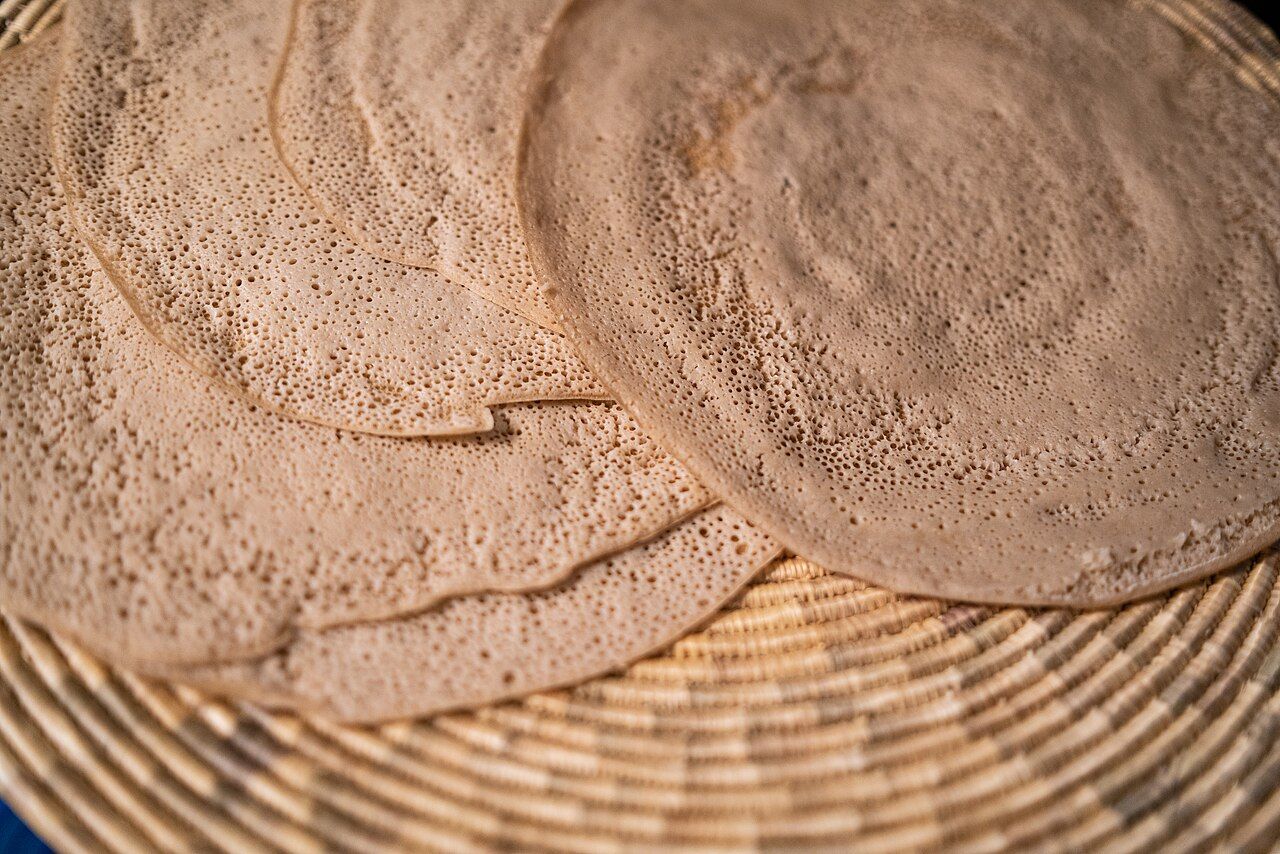
The batter is made from teff, a grain smaller than a poppy seed. Teff contains no gluten. Flour and water are left to themselves for a few days; wild yeasts sour the batter and make it foam. One side of a cooked injera is smooth, the other covered with hundreds of small holes known as "eyes".
Method
- Mix. Whisk the teff flour and water in a bowl until smooth. Cover with a cloth.
- Ferment. Leave at room temperature for 2–3 days. Bubbles should form on the surface and it should smell sour. Pour off the dark liquid that collects on top.
- Adjust the consistency. Stir in the salt. The batter should be a little thicker than crêpe batter; add water if needed.
- Cook. Heat a wide nonstick pan with a lid over medium heat. Pour in a ladle of batter in a spiral from the center outward, and tilt the pan gently to spread it.
- Cover. When holes appear on the surface, put the lid on and cook for 1–2 minutes, until the edges lift from the pan. Injera is not flipped; only one side touches the pan.
- Cool. Lift onto a cloth. Do not stack them before they cool, or they stick.
Tips
- Teff flour is sold in health food shops and online. If you cannot find it, a similar bread can be made with buckwheat flour, but the taste will be different.
- The first one or two injera usually come out badly; adjust the heat of the pan as you go.
- The longer the fermentation, the sourer the bread.