- Origin
- Algeria
- Time
- About 50 minutes
- Difficulty
- Easy
- Makes
- 2 breads
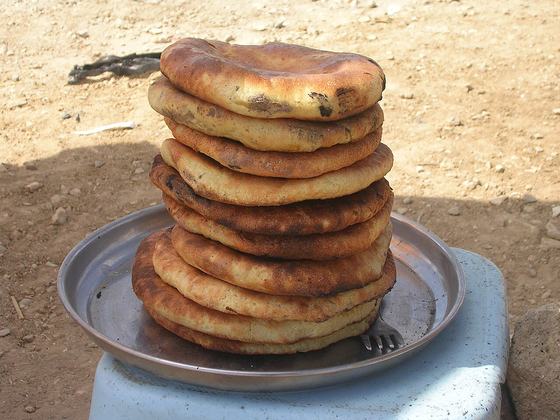
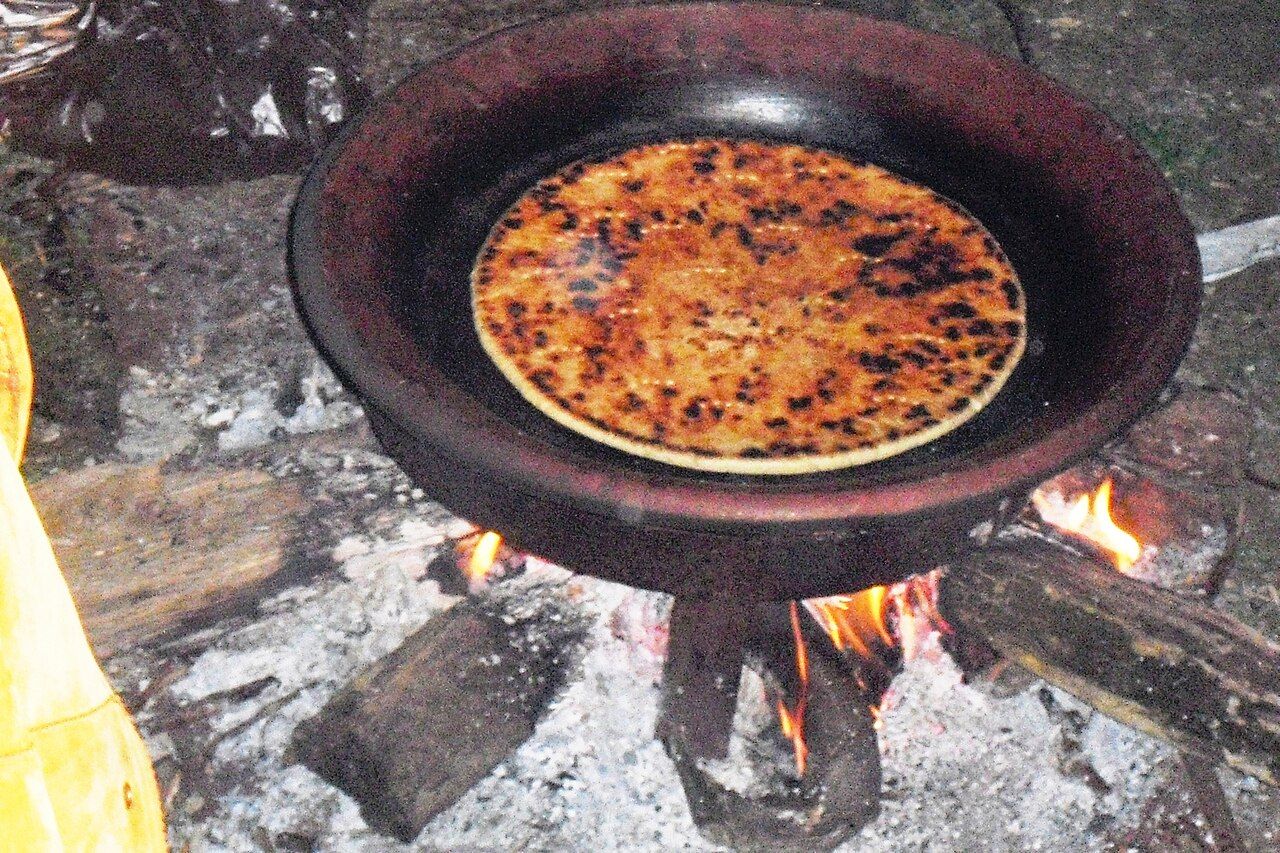
Kesra is the semolina bread made in every Algerian home, almost every day. It needs no oven: it is cooked on a flat clay pan with a ridged surface, the tajine. It is unleavened; rubbing the semolina with oil gives it a sandy, crumbly inside and a crisp outside.
It is eaten in the morning with buttermilk or dates, and through the day alongside soups and stews. The leavened, thicker version of the same dough is called matlouh.
Method
- Oil the semolina. Put the semolina and salt in a wide bowl. Pour in the olive oil and rub the mixture between your palms; every grain should be coated in oil and the mixture should feel like wet sand.
- Add the water. Add the water a little at a time and bring the dough together. Do not knead; just press until it holds. Kneaded kesra turns hard.
- Rest. Cover and leave for 15 minutes; the semolina takes up the water.
- Shape. Divide the dough in two. Press each piece out by hand into a disc 1 cm (½ in) thick and 22 cm (9 in) across. Prick the surface in a few places with a fork.
- Cook. Heat a heavy, dry pan over medium-low heat. Set the disc in it and cook each side for 6–8 minutes, until golden spots appear. Turn it in the pan now and then so it cooks evenly.
- Cook the edges. If you like, hold the bread upright and roll its edge around the pan to brown it.
Tips
- Melted butter can be used instead of the olive oil.
- Nigella or sesame seeds can be added to the dough.
- It is cut into wedges while hot; it gets crisper as it cools.