- Origin
- Lebanon, Syria, Jordan
- Time
- About 1.5 hours
- Difficulty
- Hard
- Makes
- 8 breads
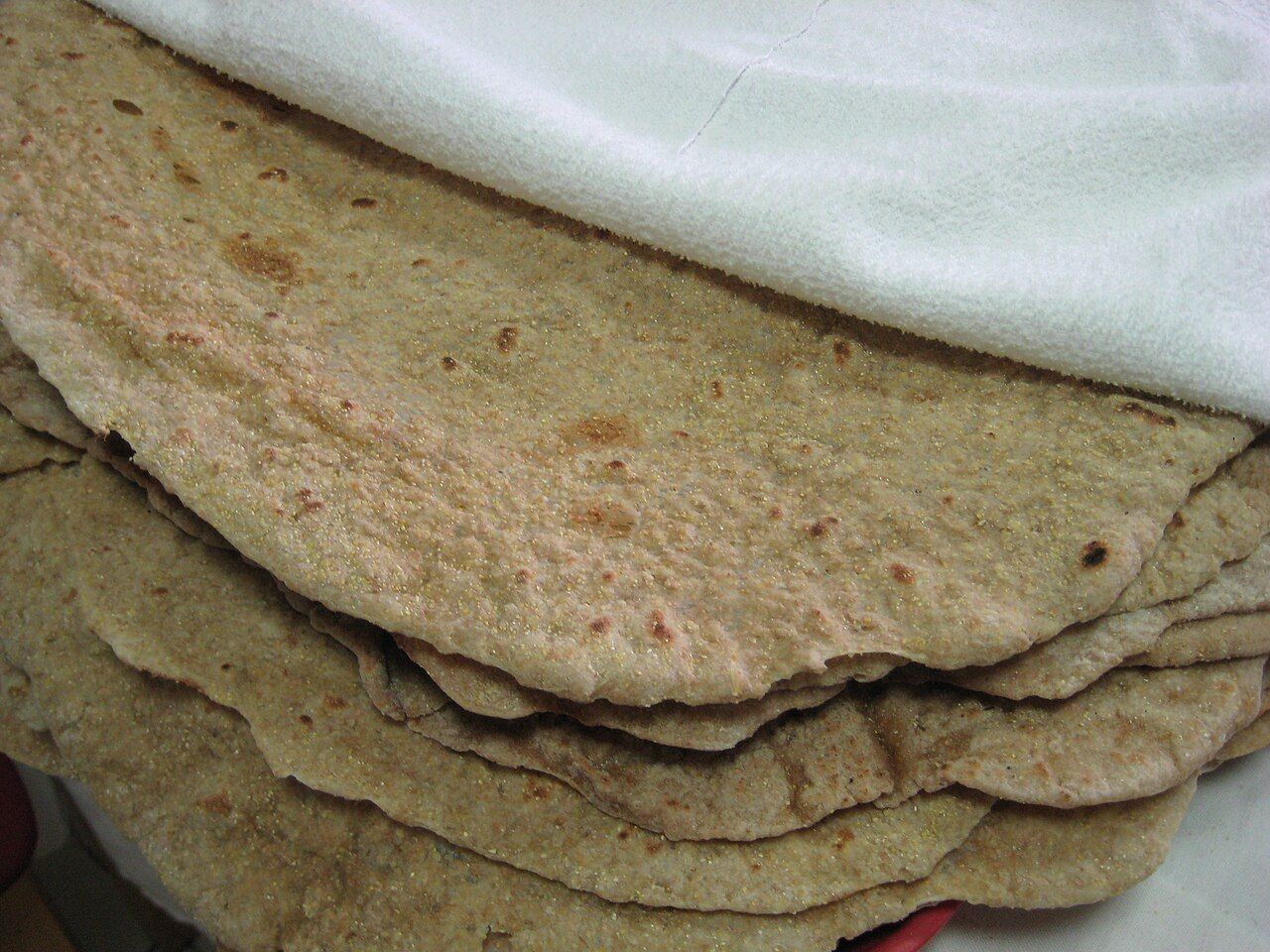
Markook means "thinned out" in Arabic; in Jordan and Palestine the same bread is called shrak. In skilled hands the dough is flung from one arm to the other until almost transparent, then laid over a domed iron griddle, the saj, set above the fire. It cooks in half a minute.
It is a very old bread, found from Bedouin tents to mountain villages; it needs no oven, and the griddle can travel by camel. It is folded and kept for days, then softened with a sprinkle of water before eating. Both its method and its logic are the same as those of Anatolian yufka bread. Jordan's national dish, mansaf, is built on this bread.
Method
- Knead the dough. Mix all the ingredients and knead for 8–10 minutes, to a very elastic dough.
- Rest. Divide the dough into 8 balls. Cover and leave for at least 1 hour. Unrested dough will not stretch thin.
- Prepare the griddle. If you have no saj, turn a large wok upside down over the burner and heat it well over medium heat.
- Stretch. Roll a ball out as far as you can with a rolling pin on a floured counter. Then lift it onto the backs of both hands and stretch it by turning it at the edges; it should be 35–40 cm (14–16 in) across and thin enough to see your hand through.
- Cook. Lay the dough over the hot surface. It blisters in 20–30 seconds; flip it and give it 10 seconds more.
- Store. Stack the cooked breads and cover with a cloth; the steam keeps them soft.
Tips
- An upturned pan gets very hot; do not touch its handles, and do not leave the stove.
- The first few breads may tear; stretch the dough with the backs of your hands, not your fingertips.