- Origin
- Jewish cuisine
- Time
- About 20 minutes
- Difficulty
- Easy
- Makes
- 4 sheets
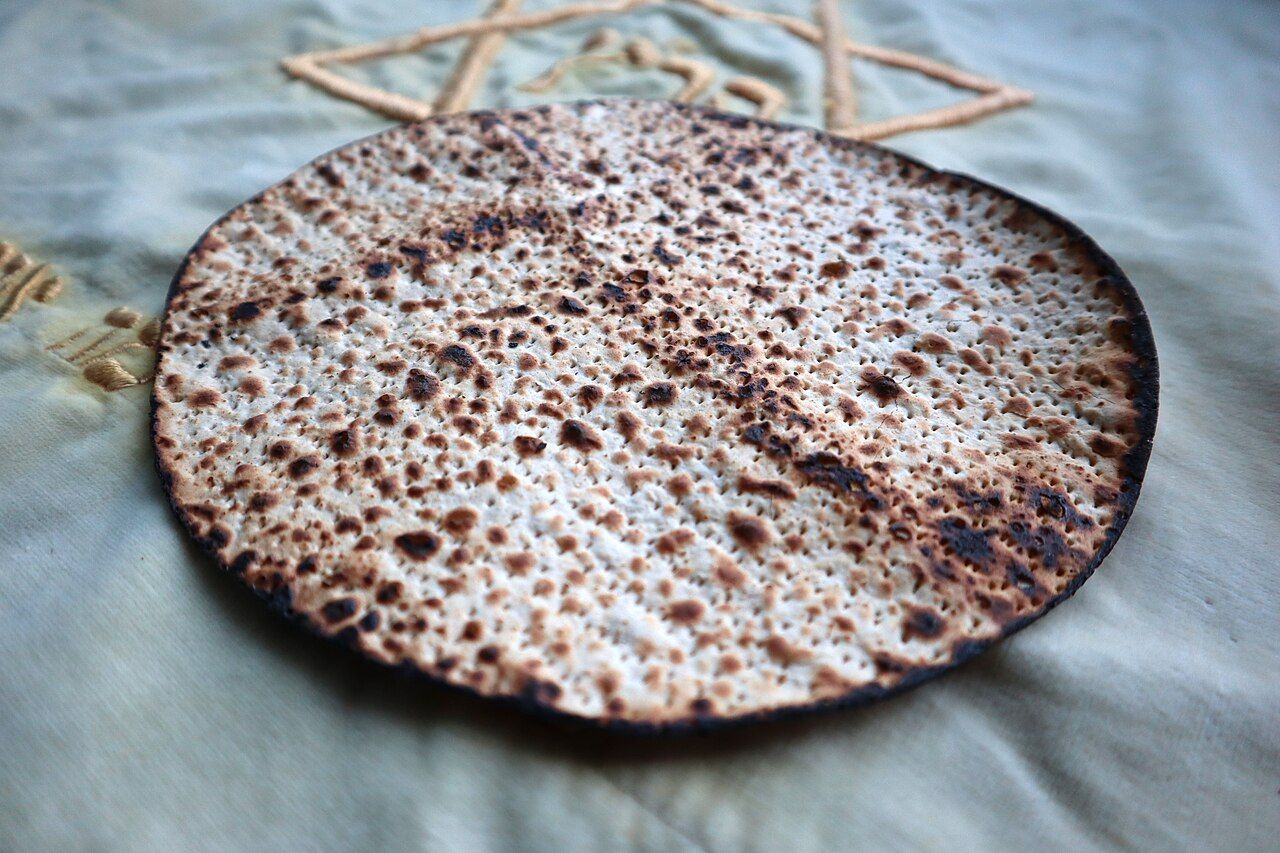
Matzo is the unleavened bread Jews eat throughout Passover (Pesach). As the story is told, the departure from Egypt was so hurried that there was no time to wait for the dough to rise, and the bread was baked unleavened. Nothing leavened is eaten during the festival; matzo is the memory of that haste.
The rule is strict: from the moment the flour meets the water until the bread comes out of the oven, no more than eighteen minutes may pass. Beyond that the dough is considered to have begun fermenting on its own. Matzo that meets religious law is made under special supervision from flour set aside for the purpose; what follows is a home recipe for getting to know the bread itself.
Method
- Heat the oven first. Heat the oven, with an upturned tray inside, as high as it goes, to 250 °C (480 °F). Have everything ready; once the dough is made there is no time to wait.
- Knead the dough. Mix the flour and water and knead for 3–4 minutes. It is a stiff dough.
- Roll out. Divide the dough in four. Roll each piece as thin as you can, until almost translucent.
- Prick. Prick the surface closely with a fork, in rows. The holes stop the bread from puffing.
- Bake. Move onto the hot tray and bake for 2–3 minutes, then turn and give it 1–2 minutes more. The edges should begin to darken and the bread should be crisp.
Tips
- Adding salt and oil makes it tastier, but then it no longer counts as traditional matzo.
- Crumbled matzo becomes the dough for the dumplings served in soup and for festive desserts.