- Origin
- Cuba
- Time
- About 16 hours (mostly waiting)
- Difficulty
- Medium
- Makes
- 2 breads
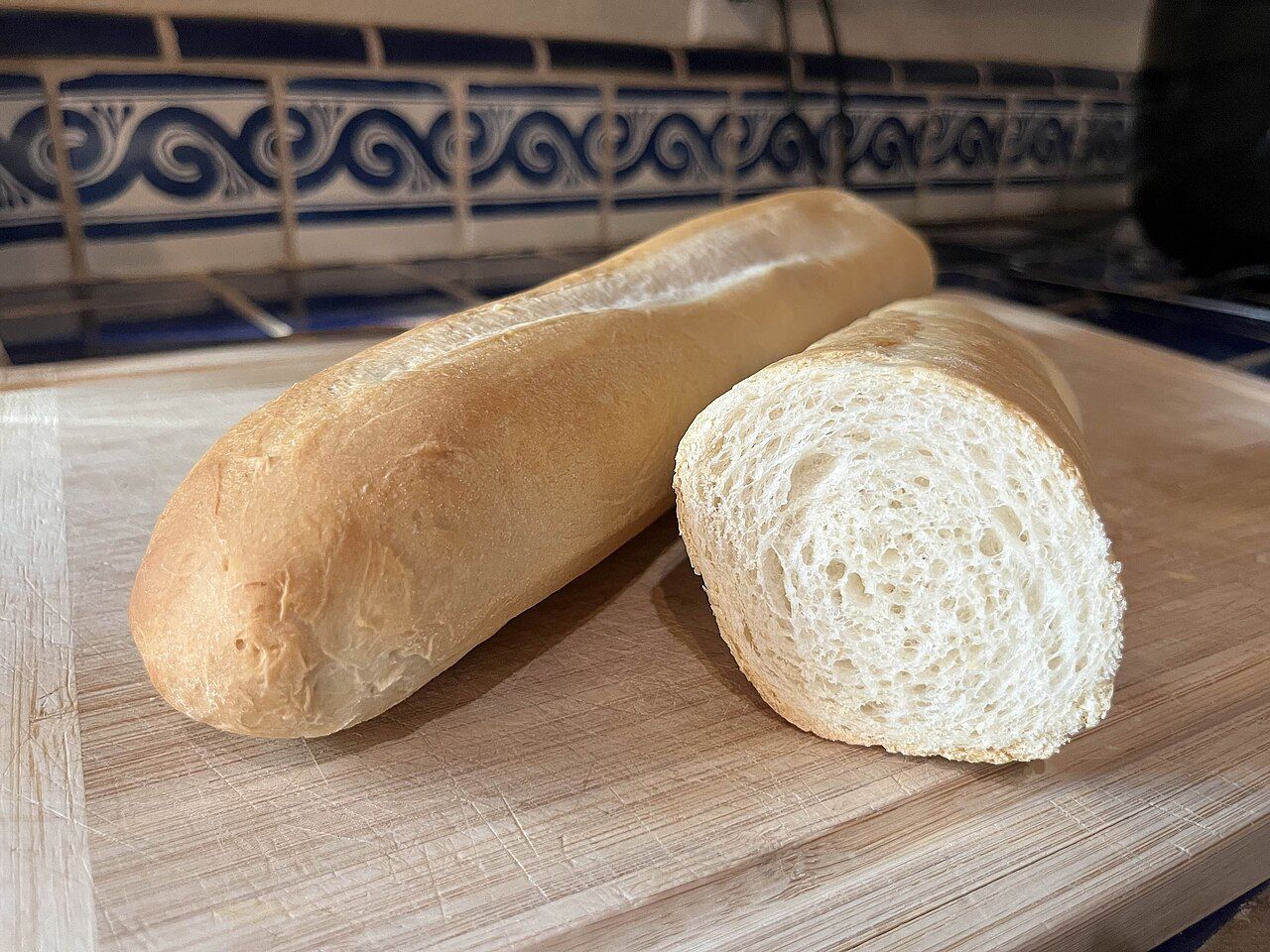
At first glance it looks like a baguette, but the difference shows when you bite it: the crust is paper-thin and crisp, the crumb much softer and tighter than a baguette's. That softness comes from the fat in the dough. Whether the bread took its present form in Cuba or in Tampa, Florida, where Cuban cigar workers settled at the end of the nineteenth century, is still debated.
In traditional bakeries a wet palmetto leaf is laid along the length of the dough; the leaf makes the bread split neatly along that line. The Cuban sandwich is made with this bread: filled with roast pork, ham, cheese, pickles and mustard, then flattened under a hot press. In the morning it is buttered and dunked in milky coffee.
Method
- Set up the preferment. The evening before, mix the flour, water and pinch of yeast. Cover and leave at room temperature for 12 hours.
- Knead the dough. Add the remaining ingredients to the preferment and knead for 10 minutes, to a smooth dough.
- Let it rise. Cover and leave for about 1 hour.
- Shape. Divide the dough in two. Spread each piece into a rectangle, roll it up tightly from the long side and seal the seam. Make two loaves 35 cm (14 in) long with blunt ends.
- Second rise. Leave seam side down on a parchment-lined tray for 45 minutes.
- Lay the string. Lay a wet piece of kitchen string along the top of each loaf and press it in lightly. The string does the job of the palmetto leaf.
- Bake. Heat the oven to 220 °C (425 °F) and put a dish of hot water on its floor. Bake for 20–25 minutes, until pale golden. Remove the string when it comes out.
Tips
- With no string, make a single shallow slash lengthwise with a razor blade.
- It is eaten the same day; pressed and toasted the next day, it is at its best.