- Origin
- Denmark
- Time
- About 5 hours, plus 1 day of resting
- Difficulty
- Medium
- Makes
- 1 loaf
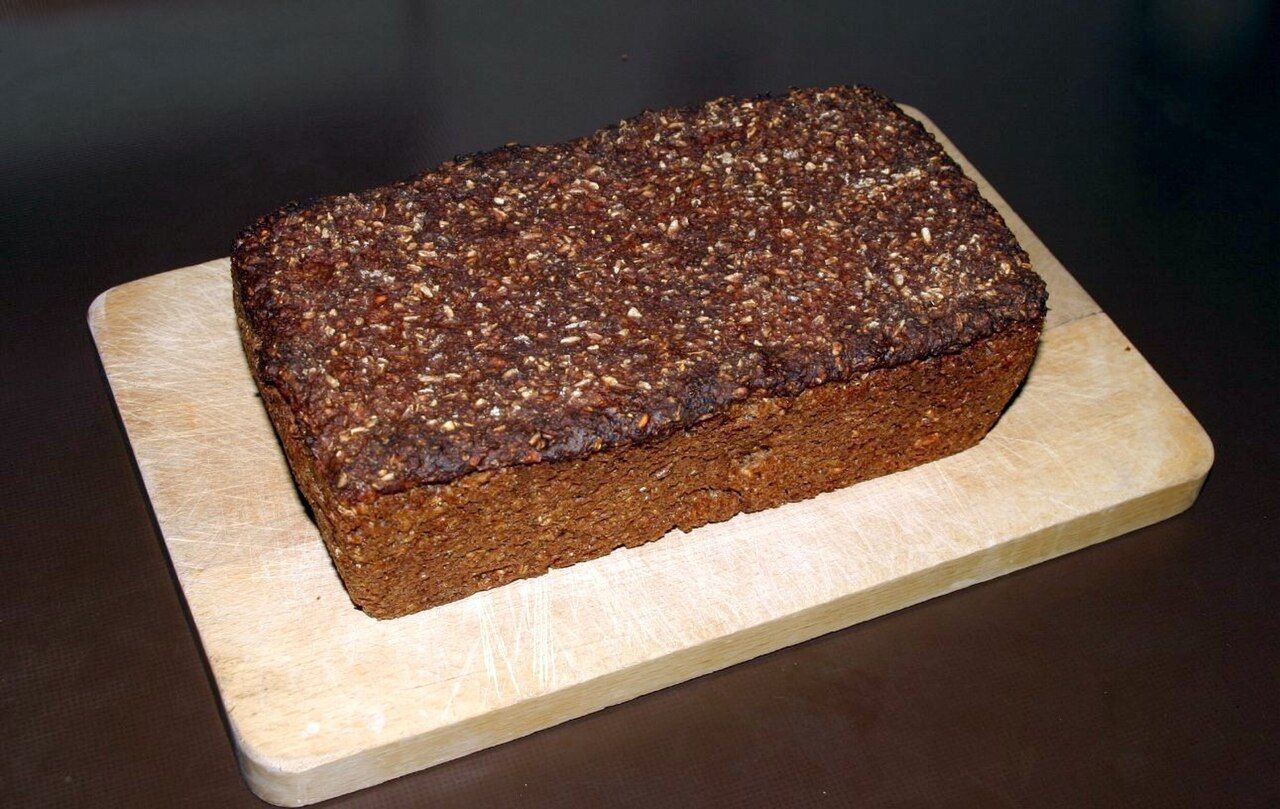
Rugbrød is the everyday bread of the Danes and the foundation of lunch. A thin slice is buttered and topped with herring, boiled egg, liver pâté or roast meat. These open sandwiches are called smørrebrød.
It is unlike the breads most of us know: it hardly rises at all, it is full of seeds, and it is heavy and moist. Traditionally it is made with sourdough; the recipe here uses dry yeast for convenience.
Method
- Soak the seeds. Leave the seed mix in a bowl with 150 g of the water for at least 1 hour, overnight if you can.
- Mix. Combine the flours, salt, yeast, molasses, the remaining water and the soaked seeds with their liquid in a bowl. Stir with a spoon for 3–4 minutes. The dough is not kneaded; it is like a thick, sticky mortar.
- Fill the tin. Spoon it into a loaf tin lined with baking parchment and smooth the top with a wet spoon.
- Let it rise. Cover and leave for 2–3 hours, until small holes appear on the surface and the dough comes close to the rim of the tin.
- Bake. Bake in an oven heated to 180 °C (350 °F) for 70–80 minutes.
- Wait. Take it out of the tin, wrap in a cloth and do not touch it for at least 24 hours. Cut too early, the crumb is sticky and doughy; it sets as it rests.
Tips
- Using 150 g of active rye sourdough starter instead of the yeast brings you closer to the original flavor; the rise then takes 6–8 hours.
- It is sliced thinner than half a centimeter (¼ in).
- Wrapped in a cloth, it stays fresh for a week.