- Origin
- Japan
- Time
- About 3 hours
- Difficulty
- Medium
- Makes
- 10 buns
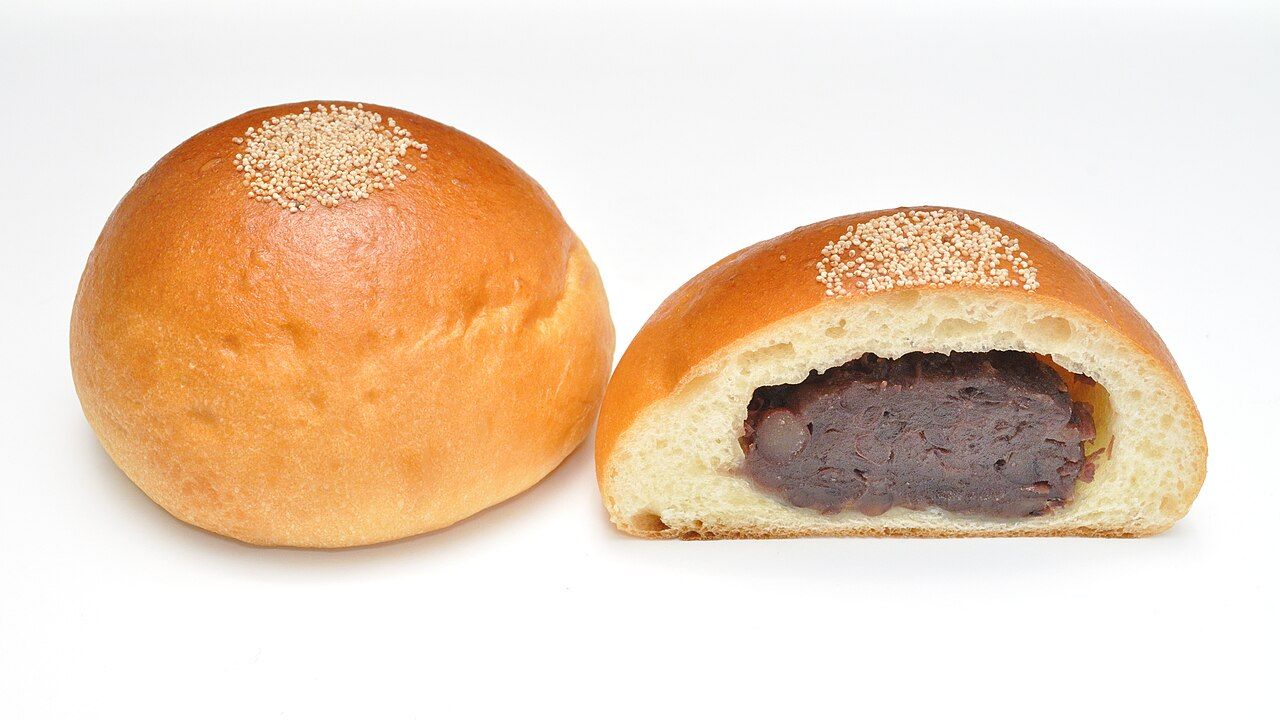
When Japan opened to the outside world in the second half of the nineteenth century, bread was thought of as foreigners' food. Kimura Yasubei, a former samurai who had opened a bakery in Tokyo, found a way to fit it to the Japanese palate: he raised the dough with a sake yeast and filled it with sweet red bean paste, the filling of traditional sweets. That is where the name comes from: an is bean paste, pan is bread.
The anpan presented to Emperor Meiji in 1875 had a salted cherry blossom set in its middle. The emperor's approval sped the bread's acceptance in the country. Today it is in every bakery and is regarded as the ancestor of Japanese sweet buns.
Method
- Knead the dough. Mix everything except the butter, the paste and the topping and knead for 6 minutes. Add the butter and knead for another 6–8 minutes.
- Let it rise. Cover and leave for about 1 hour.
- Prepare. Divide the dough into 10 pieces, round them and rest for 10 minutes. Divide the bean paste into 10 balls as well.
- Fill. Flatten each ball of dough in your palm into a disc, thin at the edges and thick in the middle. Set the paste in the middle, gather the edges and pinch them firmly shut.
- Second rise. Place seam side down on a parchment-lined tray, press lightly and leave for 40 minutes.
- Glaze. Brush with beaten egg and put a pinch of black sesame in the middle.
- Bake. Bake at 180 °C (350 °F) for 13–15 minutes, until golden.
Tips
- Anko is sold ready-made in East Asian grocery shops. To make it at home, boil adzuki beans until soft and cook them with half their weight in sugar until thick.
- If the seam is not sealed well, the paste leaks out in the oven.