- Origin
- India (Kerala)
- Time
- About 1 day (mostly waiting)
- Difficulty
- Hard
- Makes
- 10–12 appams
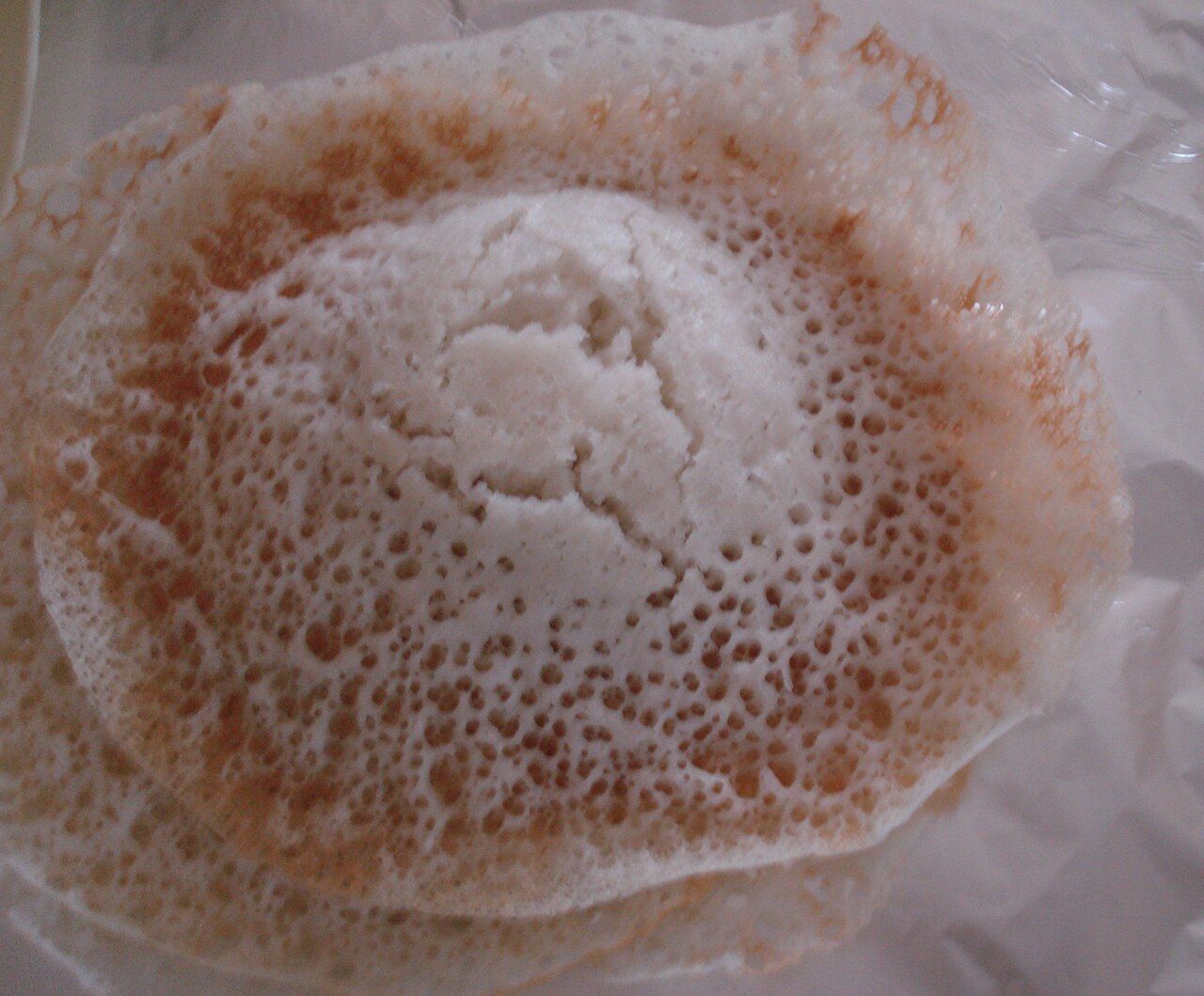
Appam is the bread of Kerala, in the southwest of India, and of Sri Lanka. A fermented batter of rice and coconut is poured into a small, deep, round-bottomed pan called an appachatti; the pan is swirled by hand so that the batter spreads up the sides in a thin layer while pooling in the middle. The result looks like a bowl: paper-thin and crisp at the edge, thick, soft and spongy at the center.
Traditionally it is fermented with toddy, a drink made from palm sap; most homes use yeast today. It is eaten with a coconut milk stew of vegetables or meat. It contains no wheat.
Method
- Soak. Soak the rice in plenty of water for 4–5 hours and drain.
- Grind. Blend the soaked rice, cooked rice and coconut with about 250 g of water to a smooth batter.
- Ferment. Stir in the yeast and sugar. Cover and leave somewhere warm for 8 hours or overnight; the batter should rise and turn frothy.
- Adjust the consistency. Add the salt and coconut milk and stir gently. It should be like a thin crêpe batter.
- Pour. Heat a small round-bottomed pan or a small wok over medium heat and grease it very lightly. Pour a ladleful of batter into the middle, take the pan by both handles and swirl it round once.
- Cook. Put the lid on and wait 2–3 minutes, until the edges are golden and come away from the pan and the middle is cooked. It is not flipped.
Tips
- Swirl the pan only once; a second turn thickens the edge and it loses its crispness.
- Crack an egg onto the batter in the middle and put the lid on, and you have egg appam.