- Origin
- Scotland, Canada
- Time
- About 35 minutes
- Difficulty
- Very easy
- Makes
- 1 large bread
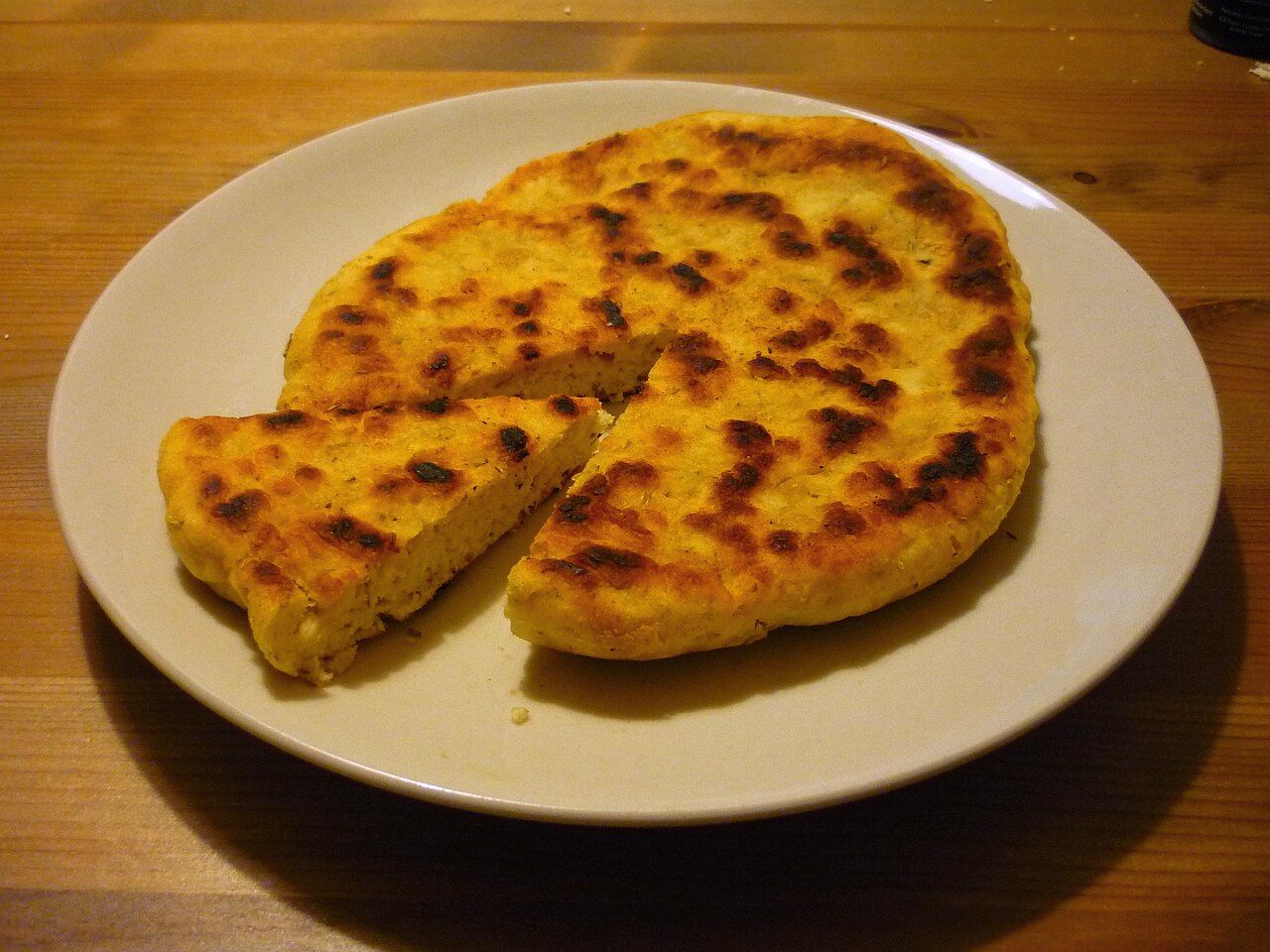
Bannock comes from Scotland, where it was made from oat or barley flour and cooked on a flat stone by the hearth. It crossed to North America with fur traders and settlers and took root in the cooking of the Indigenous peoples of Canada. Indigenous communities had been making similar breads before the Europeans arrived, from corn and from flours made of wild plant roots; with the coming of wheat flour the recipe took its present form.
In Canada today there are both pan-cooked and deep-fried versions, and it is a constant at Indigenous community gatherings.
Method
- Mix the dry ingredients. Combine the flour, baking powder and salt.
- Rub in the butter. Rub the butter into the flour with your fingertips.
- Add the liquid. Pour in the milk and mix only until combined. The dough is soft and a little sticky.
- Shape. On a floured counter, form a disc 2 cm (¾ in) thick that fits your pan.
- Cook. In a lightly greased heavy pan, over low heat and with the lid on, cook each side for 8–10 minutes.
- Check. A toothpick pushed into the middle should come out clean.
Tips
- If the heat is too high, the outside burns and the middle stays doughy.
- Raisins or blueberries can be added to the dough.
- To bake it in the oven instead, 20–25 minutes at 200 °C (400 °F) is enough.