- Origin
- Dominican Republic, Cuba, Haiti, Venezuela
- Time
- About 1.5 hours
- Difficulty
- Medium
- Makes
- 6 thin breads
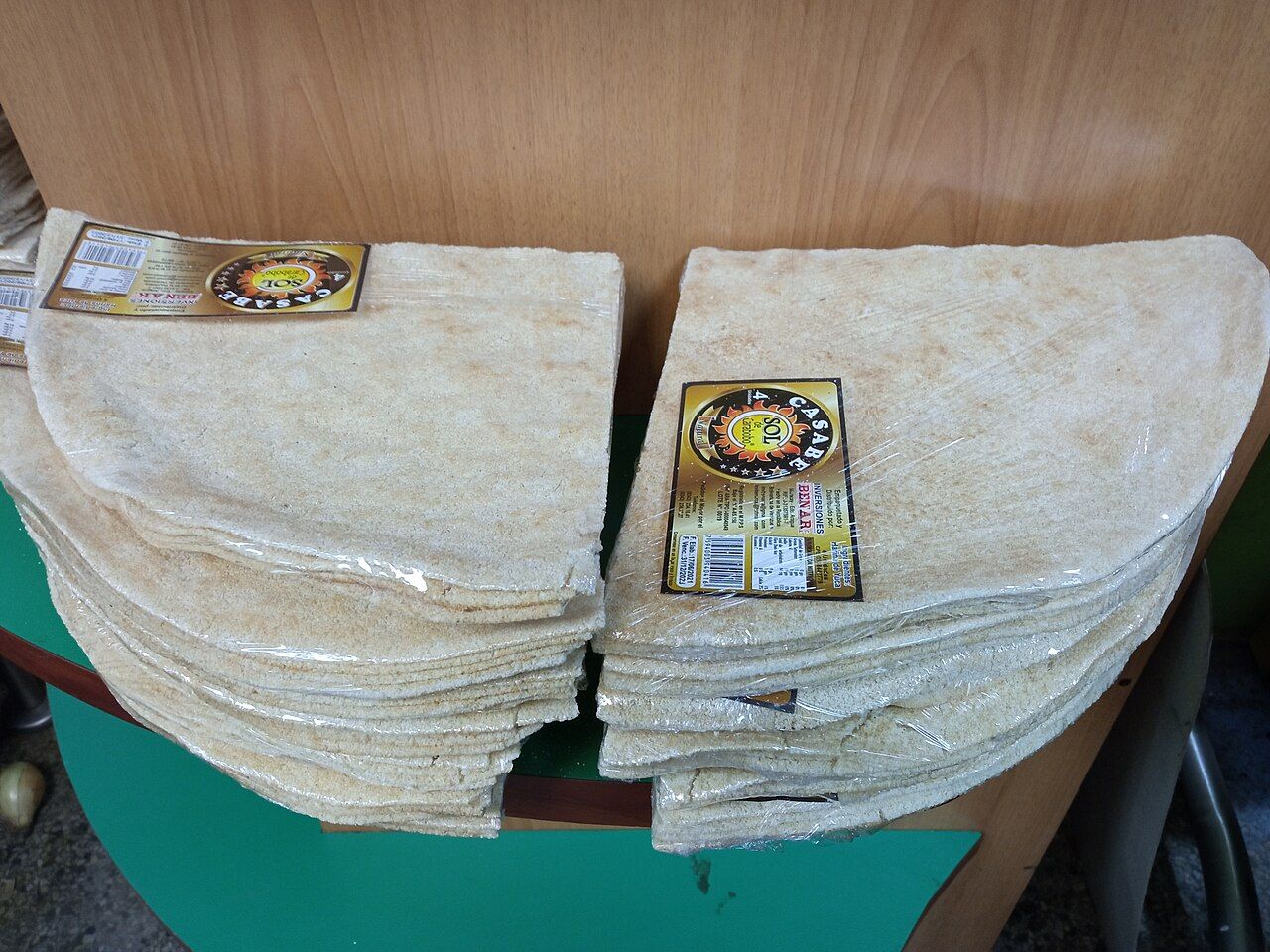
Casabe is the bread of the Taíno, the people who lived on the Caribbean islands long before Columbus, and it is still made by the same method today. Cassava root is grated, squeezed in a long woven tube to press out its juice, sifted, and cooked on a flat clay griddle into thin, crisp discs. There is no flour, yeast or fat in it. Kept dry, it lasts for months; Spanish ships filled their holds with casabe for long voyages.
The traditions of making and eating cassava bread were added to UNESCO's list of intangible cultural heritage in 2024, on a joint nomination by Cuba, the Dominican Republic, Haiti, Honduras and Venezuela.
Important: traditional casabe is made from bitter cassava, whose juice is poisonous and becomes harmless only through pressing and cooking. At home use only sweet cassava sold as food, throw away the juice you press out, and never eat cassava raw.
Method
- Grate. Grate the cassava on the finest side of the grater.
- Squeeze. Put the gratings in a clean cloth and wring it with all your strength to press out the juice. The pulp should end up dry and crumbly. Throw the juice away.
- Sift. Mix the pulp with the salt and push it through a coarse sieve; the lumps should break up.
- Spread. Heat a heavy, dry pan over medium heat. Sprinkle the pulp into an even circle 3–4 mm (⅛ in) thick and press it lightly with a spatula.
- Cook. Wait 3–4 minutes, until the disc holds together in one piece. Flip it and cook for another 2–3 minutes.
- Dry. Give the discs 10 minutes in a 120 °C (250 °F) oven; they should dry out completely and turn crisp.
Tips
- If the pulp stays wet, the disc will not hold and turns to mush; the squeezing step is everything.
- If you cannot find fresh cassava, frozen grated cassava does the same job; thaw it and squeeze.
- It is eaten brushed with garlic oil, or with avocado.