- Origin
- Ireland
- Time
- About 1 hour
- Difficulty
- Very easy
- Makes
- 1 loaf
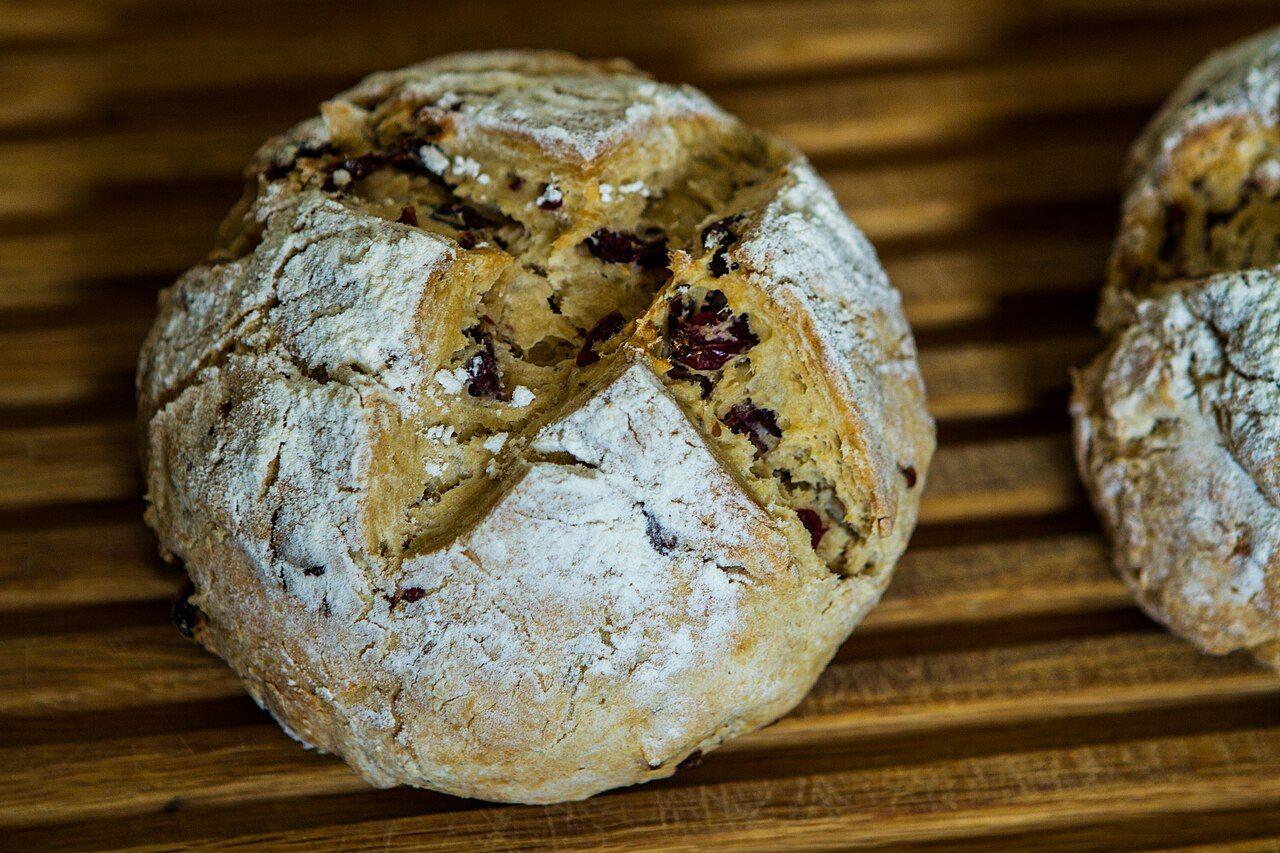
Soda bread became widespread in Ireland in the 19th century. The flour from the soft wheat grown in the country was not well suited to yeasted bread; baking soda, on the other hand, was cheap and gave a result without an oven, even in a pot at the hearth.
What raises the bread is not fermentation but chemistry: the acid in the buttermilk reacts with the baking soda and gives off gas. That is why the dough is neither rested nor kneaded.
Method
- Heat the oven. Heat the oven to 200 °C (400 °F) and line a tray with baking parchment.
- Mix the dry ingredients. Combine the flour, baking soda and salt thoroughly in a wide bowl. No lumps of baking soda should be left.
- Add the buttermilk. Make a well in the middle and pour in the buttermilk. Spread your hand like a claw and mix with a few circular movements. Stop as soon as the dough comes together; it will be soft and sticky.
- Shape. Gather the dough lightly on a floured counter into a round 4–5 cm (about 2 in) high. Move it to the tray.
- Cut a cross. With a sharp knife, cut a deep cross into the top, almost down to the base. The cut lets the middle of the loaf bake through.
- Bake. Bake for 40–45 minutes. It should sound hollow when knocked on the bottom.
Tips
- The less you mix the dough, the softer the bread. Kneading makes it tough.
- Too much baking soda gives the bread a soapy taste and a greenish tint.
- Soda bread is eaten fresh; the next day it is toasted.