- Origin
- Japan
- Time
- About 4 hours
- Difficulty
- Medium
- Makes
- 1 loaf
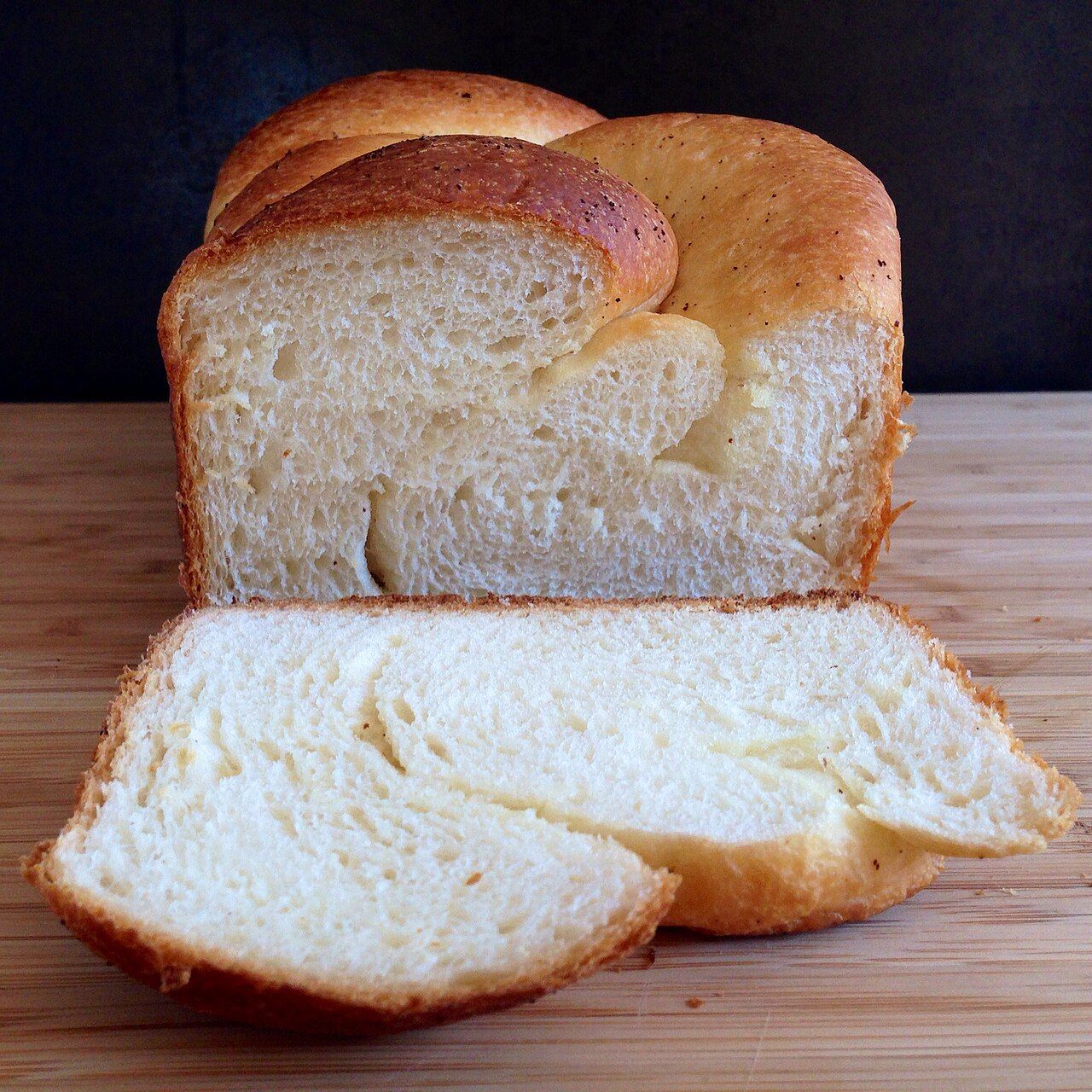
Shokupan is Japan's everyday bread for sandwiches and breakfast. The secret of its extraordinary softness is that a small part of the flour is cooked with milk beforehand. Cooked starch binds far more water than usual; the dough is moister and the bread stales later. The method is known by its Chinese name, tangzhong; in its close Japanese relative, yudane, the flour is not cooked but mixed with boiling water.
Method
- Cook the paste. Cook the 25 g flour and 125 g milk in a small pan over low heat, stirring all the time, until it has the consistency of a thick custard. Cover and leave to cool to lukewarm.
- Knead the dough. Mix everything except the butter, together with the paste, and knead for 8 minutes. Add the butter and knead for another 8–10 minutes, until the dough passes the windowpane test. The dough is sticky; a mixer makes it easier.
- First rise. Cover and leave for about 1 hour.
- Shape. Divide the dough into three pieces, round them and rest for 15 minutes. Roll each piece into an oval, fold the two long edges into the middle and roll it up from the short end. Line the rolls up side by side in a greased loaf tin.
- Second rise. Leave for 45–60 minutes, until the dough reaches the rim of the tin.
- Bake. Brush the top with milk. Bake at 175 °C (350 °F) for 30–35 minutes.
- Cool. Turn out of the tin straight away and cool on a wire rack.
Tips
- Long kneading is essential. The feathery texture comes from well-developed gluten.
- Bake it in a lidded tin and you get the square, sharp-cornered slices of Japanese bakeries.
- Cut it thick, toast it and spread it with butter. That is the favorite way to eat it in Japan.