- Origin
- Armenia
- Time
- About 3.5 hours
- Difficulty
- Medium
- Makes
- 2 breads
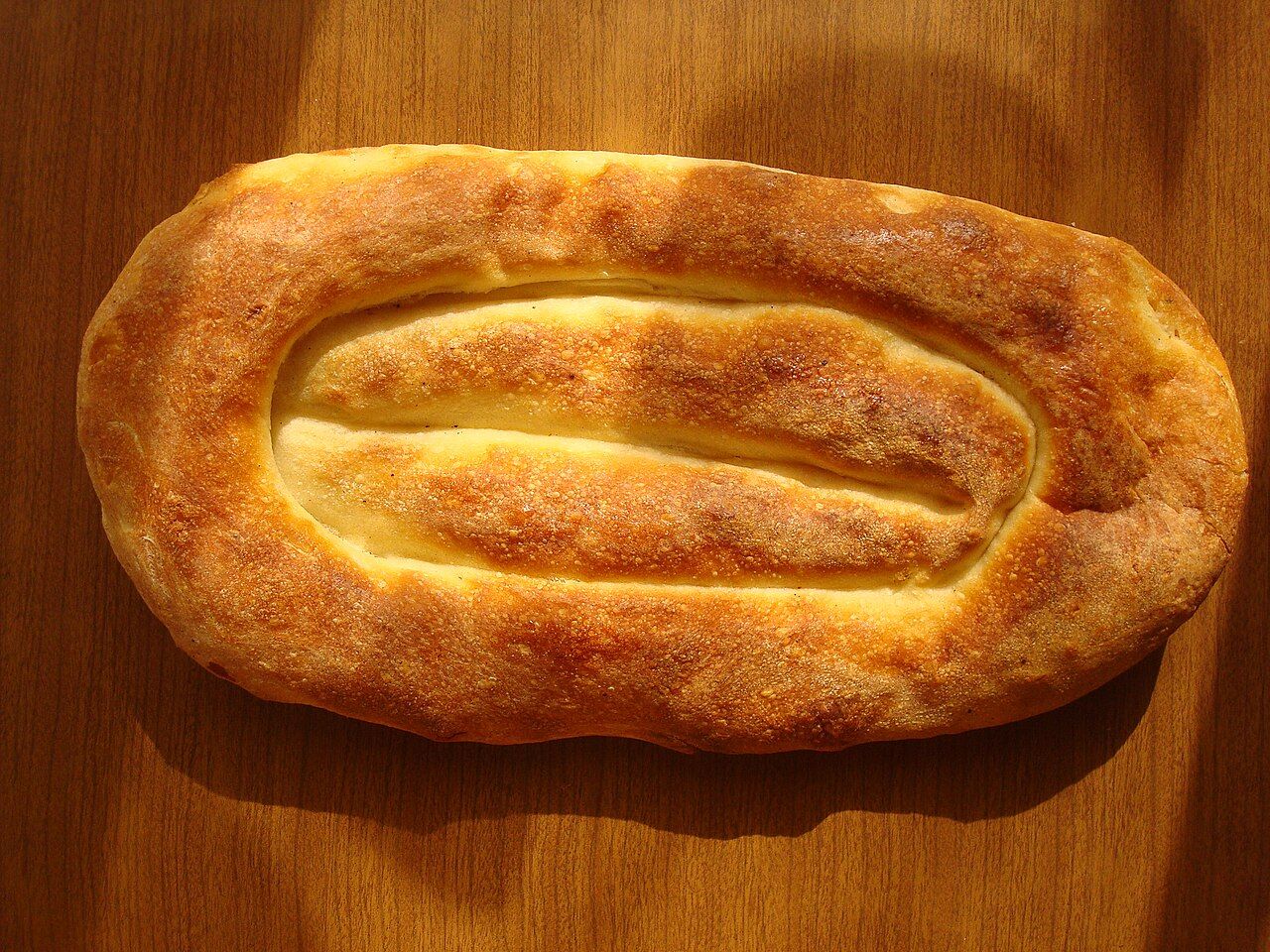
The name means "drawn with the fingers" in Armenian, and it describes how the bread is shaped: the baker presses deep furrows around and along the oval dough with the fingers. Baked, it comes out with a puffed rim and a lined middle, like a plowed field. Its present form is said to have spread in Soviet Armenia in the 1930s.
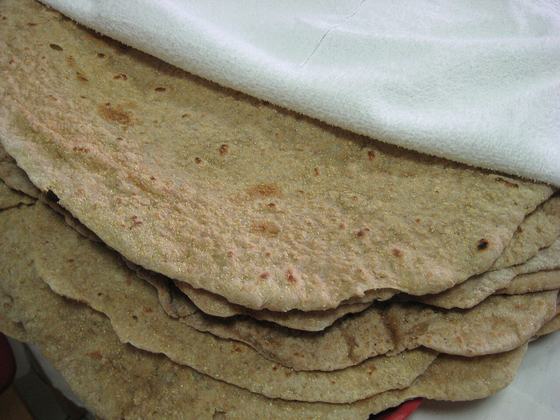
If lavash is thin and dry, matnakash is its opposite: thick, soft and open-crumbed. It gets its glossy golden crust from a flour paste brushed on before it goes into the oven.
Method
- Mix. Combine the dough ingredients. The dough is wet and sticky; rest it for 20 minutes.
- Fold. Fold three times with a wet hand, at 30-minute intervals.
- Let it rise. Leave for 2 hours in all, until doubled in volume.
- Make the paste. Stir the tablespoon of flour into the water in a small pan and cook until it thickens; let it cool.
- Shape. Divide the dough in two on a floured counter. On baking parchment, shape each piece by hand into an oval 30 cm (12 in) long. Rest for 20 minutes.
- Draw. Brush the dough with the paste. With wet fingers, press a furrow all the way round, two fingers in from the edge; draw two or three more lengthwise down the middle. The furrows should go right down to the base.
- Bake. Bake on a hot tray in an oven heated to 240 °C (465 °F) for 20–25 minutes, until deep golden.
Tips
- Press the furrows deep without hesitating; they fill in and vanish in the oven.
- Some bakers brush with strong sweet tea instead of the paste.