- Origin
- Mexico
- Time
- About 5 hours
- Difficulty
- Medium
- Makes
- 2 breads
In Mexico, 1 and 2 November are the days when the dead are believed to return home. Families set up an altar in the house, with marigolds, candles, a photograph of the person who has died and the foods they loved. Pan de muerto, "bread of the dead", is a fixed part of that altar and is sold in every bakery from mid-October.
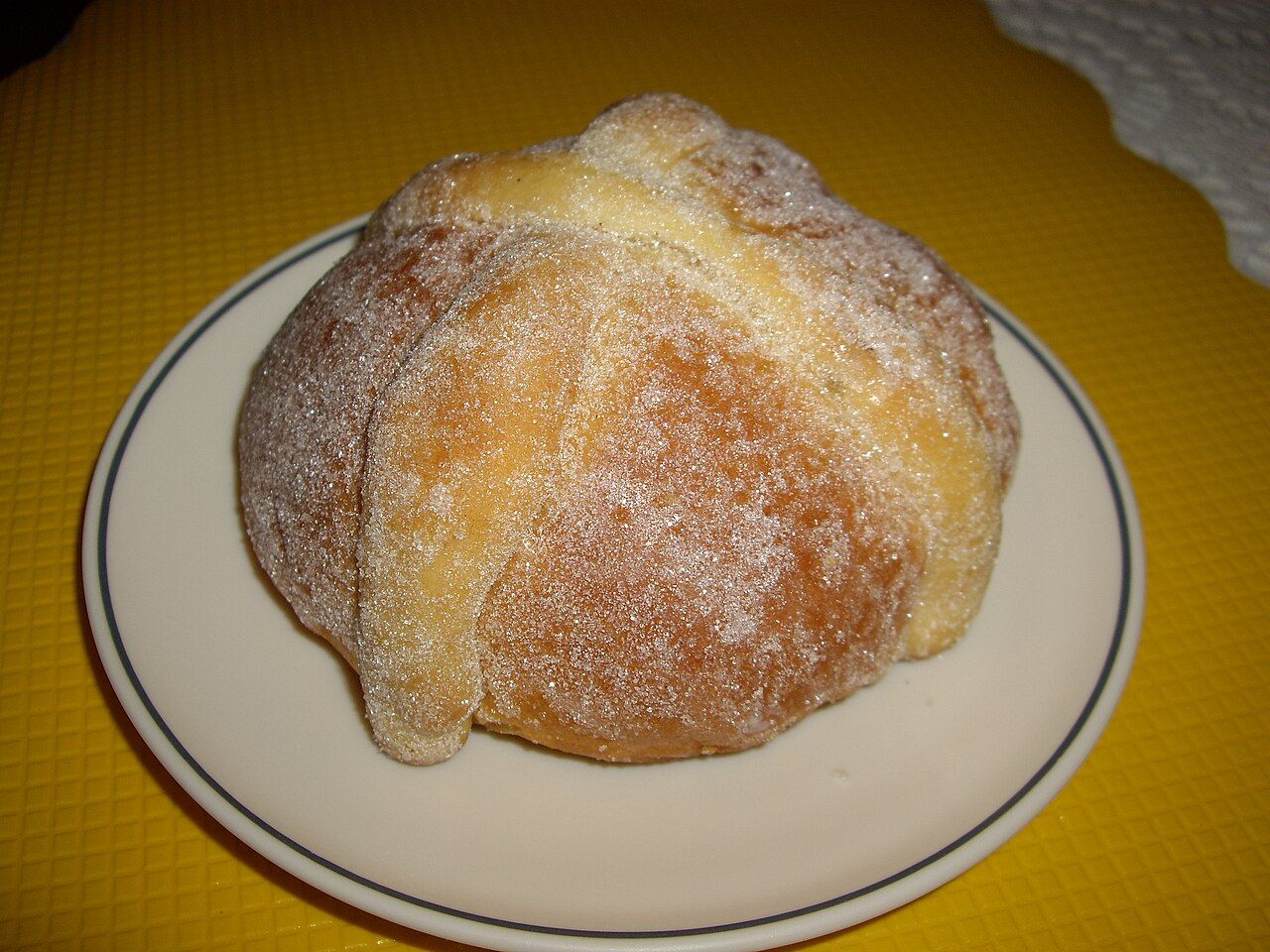
Strips of dough are laid crosswise over the round loaf; they stand for bones, and the small ball in the middle for the skull. The dough is rich with butter and eggs and smells of orange and anise; the top is coated in sugar. It is eaten dunked in hot chocolate.
Method
- Knead the dough. Mix everything except the butter and the topping and knead for 8 minutes. Add the butter piece by piece and knead for another 10 minutes, until the dough is glossy and elastic.
- Let it rise. Cover and leave for 2 hours, until doubled in volume.
- Divide. Set aside a quarter of the dough for the bones. Divide the rest in two, form tight balls and place them on a parchment-lined tray.
- Make the bones. From the reserved dough make two small balls and four ropes. Roll the ropes with your fingers spread apart; this gives a knobbly, bone-like shape.
- Arrange. Lay two ropes crosswise over each loaf and set a small ball where they cross. Stick them down with water.
- Second rise. Leave for 1 hour.
- Bake. Bake at 180 °C (350 °F) for 25–30 minutes, until golden. Once lukewarm, brush with melted butter and coat in granulated sugar.
Tips
- If you can find orange blossom water, add a tablespoon to the dough; that is the original scent.
- If the bones slip during the second rise, straighten them before the bread goes into the oven.