- Origin
- Iran
- Time
- About 5 hours
- Difficulty
- Hard
- Makes
- 2 breads
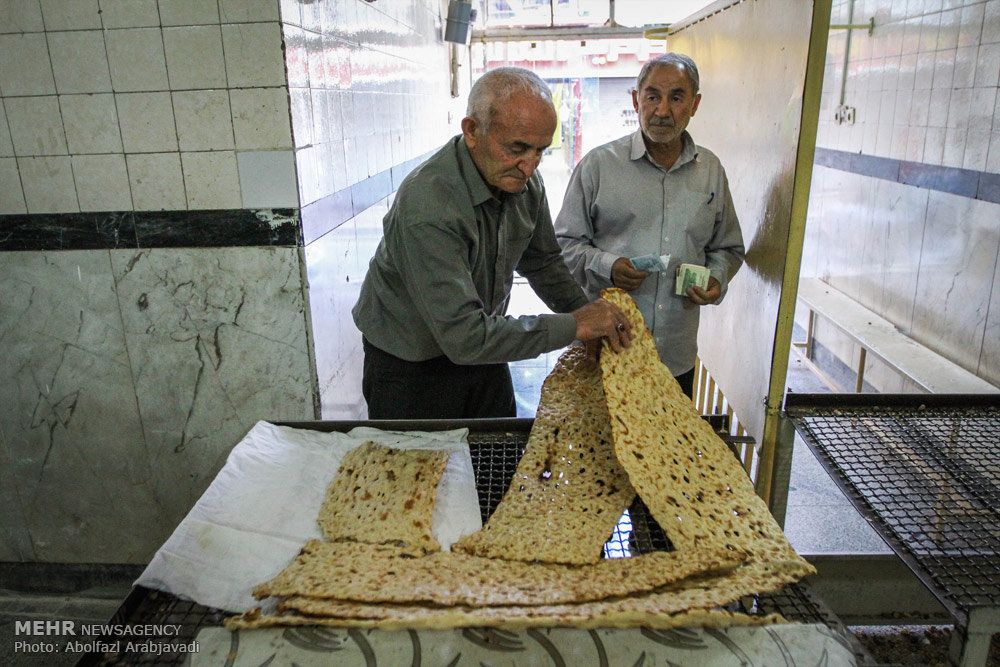
Sang is Persian for stone, and sangak means "little stone". This bread bakes on the hot pebbles that cover the sloping floor of the oven. The baker spreads the very wet dough over a long peel and lays it across the stones. The bread takes on their shape: its surface is all hollows and bumps. It comes out of the oven close to a meter long and is hung on a nail to cool; the few pebbles that cling to it are shaken off.
It is regarded as the national bread of Iran. As the story goes, it dates back to the days when every soldier carried a pouch of pebbles, which were pooled at the resting place so that bread could be baked on them.
Setting up a bed of stones at home is not practical; the recipe below comes close to the bread's dough and thinness on a hot tray.
Method
- Mix the dough. Stir all the ingredients together with a spoon. The dough is runny; it is not kneaded.
- Fold. Fold three times with a wet hand, at 30-minute intervals.
- Let it rise. Leave for 3–4 hours in all, until full of bubbles. The long rise is where the flavor comes from.
- Heat the oven. Heat the oven, with an upturned tray inside, to 250 °C (480 °F).
- Spread. Tip half the dough onto baking parchment. With wet hands, press and pull it into a very thin rectangle of 40×18 cm (16×7 in). Press dimples all over the surface with your fingers.
- Sprinkle. Sprinkle with sesame and poppy seeds.
- Bake. Slide it on its parchment onto the hot tray and bake for 6–8 minutes, until the edges brown.
Tip
Hot sangak with feta-style white cheese, walnuts and fresh herbs is the Iranian breakfast itself.