- Origin
- Spain (Catalonia)
- Time
- About 4 hours
- Difficulty
- Hard
- Makes
- 4 breads
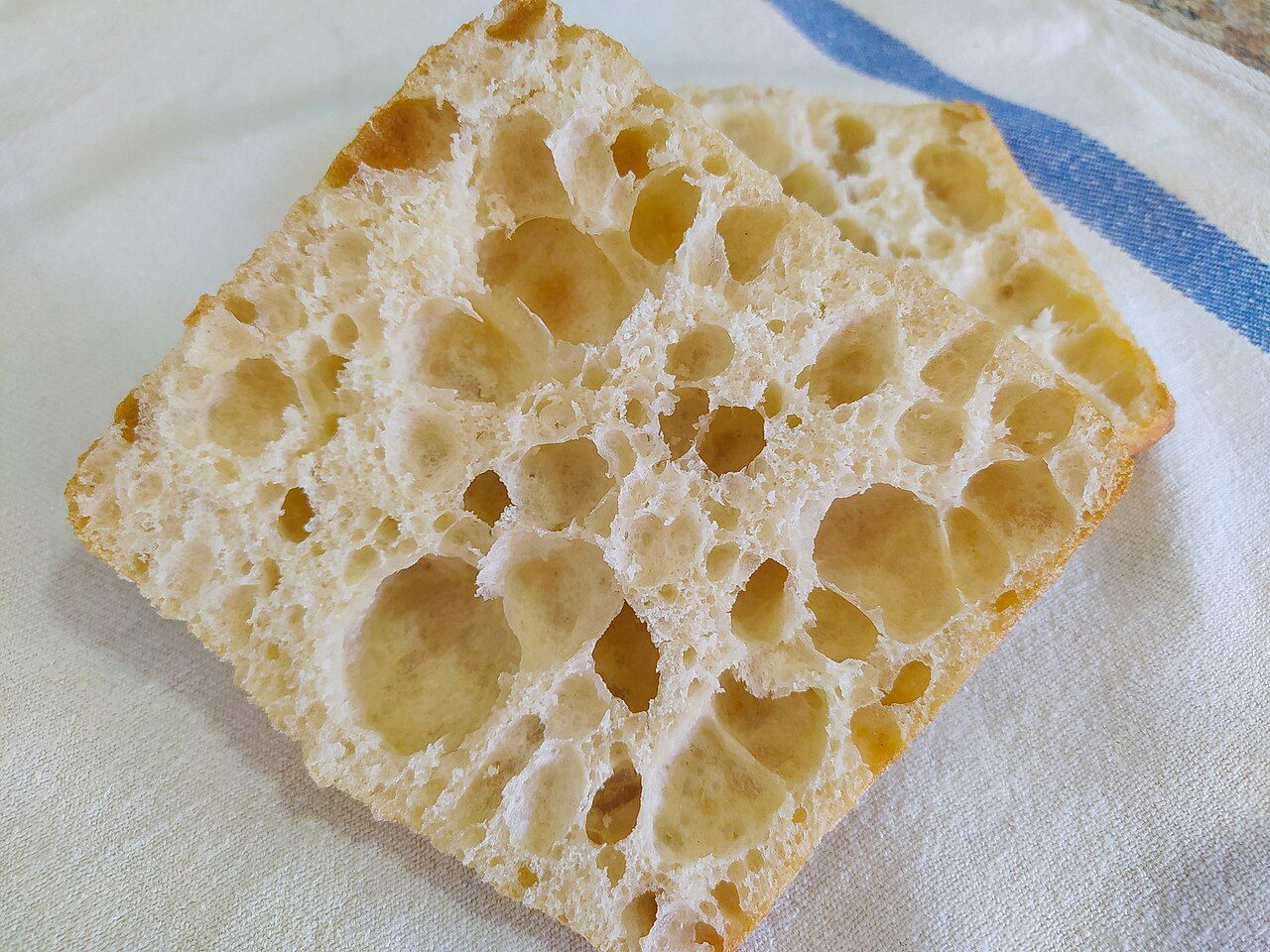
Pan de cristal, "glass bread", is named for its crust: it is so thin that it shatters like glass when you bite it. The inside is full of large, glossy holes; you eat more air than bread. It is said to have been developed by a baker in Catalonia in the early 2000s, and it soon became the favorite base for pa amb tomàquet, bread rubbed with tomato.
The secret is the amount of water: as much water as flour. A dough this wet is not kneaded, only folded; it is not shaped either, just cut and left on the tray.
Method
- Mix. Combine all the ingredients in a bowl with a spoon. Cover and leave for 30 minutes.
- Fold. With a wet hand, take the dough by its edge, pull it up and fold it into the middle; repeat four times, turning the bowl. Do this four times at 30-minute intervals. The dough holds together a little better each time.
- Let it rise. After the last fold, leave for 1.5 hours, until the dough is full of bubbles and wobbles.
- Cut. Flour the counter generously. Turn the dough out without knocking out the gas and flour the top as well. Cut into four rectangles with a scraper. Do not shape.
- Rest. Move the pieces onto baking parchment and leave for 20 minutes. Heat the oven, with its tray inside, to 250 °C (480 °F) and put a dish of hot water on its floor.
- Bake. Slide them on their parchment onto the hot tray. Bake patiently for 20–25 minutes, until the crust is deep golden.
Tips
- If the flour is not strong, the dough cannot carry this much water; lower the water to 400 g on your first attempt.
- Wet your hand every time you touch the dough; do not add flour.
- Split it, toast it, rub it with tomato and drizzle with olive oil and salt.