- Origin
- Greece
- Time
- About 5 hours
- Difficulty
- Medium
- Makes
- 2 braids
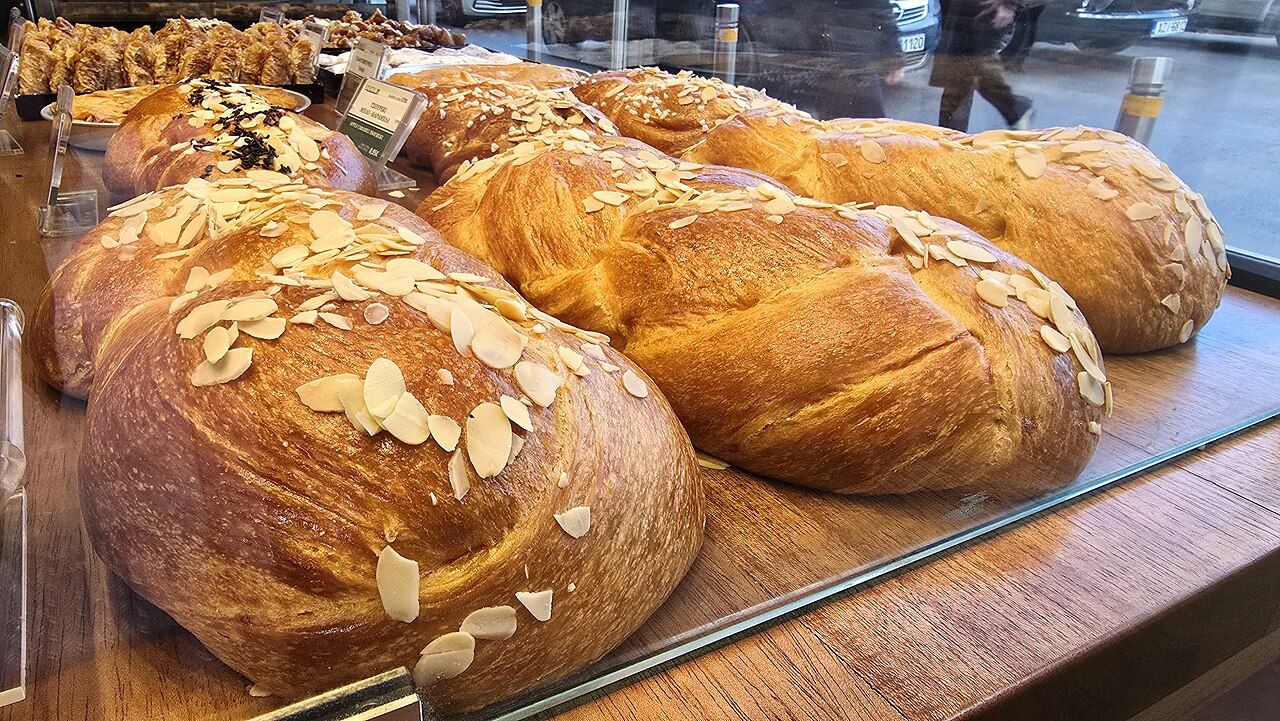
Tsoureki is the bread of the Easter table in Greece; an egg dyed red is tucked into the braid. The paskalya çöreği sold all year round in Turkish pastry shops is the same bread, and its name is related to the Turkish word çörek.
Two scents set it apart from other sweet breads: mahleb, made from the kernels of a wild cherry, and mastic, the resin of the island of Chios. A good tsoureki pulls apart in strands like cotton thread; for that the dough needs long kneading.
Method
- Knead the dough. Mix everything except the butter and knead for 8 minutes. Add the butter piece by piece and knead for another 10 minutes, until the dough is glossy and very elastic.
- Let it rise. Cover and leave for 2 hours, until doubled in volume. Sweet dough rises slowly.
- Braid. Divide the dough in six. Roll each piece into a 35 cm (14 in) rope and braid them in threes.
- Second rise. Leave on a parchment-lined tray for 1–1.5 hours.
- Glaze. Loosen the egg yolk with a spoonful of milk, brush it on and scatter over the almonds.
- Bake. Bake at 170 °C (340 °F) for 30–35 minutes. If the top browns early, cover with foil.
Tips
- Pound the mastic in a mortar with a pinch of sugar; on its own it sticks.
- Mahleb and mastic are sold by Greek, Turkish and Middle Eastern grocers and online. If you have neither, grated orange zest can be used, though the scent will be different.